
Short answer on 3X vs weighted balls: Weighted-ball programs load the throwing arm with heavier and lighter balls, and the best controlled trial found they add a little velocity but came with a 24% injury rate in teenage pitchers. 3X Pitching puts the overload on the legs, hips and trunk through Olympic lifting, full-range squats and mechanics work, keeping the regulation baseball in the arm. Neither approach has a published randomized trial of a complete commercial program, so choose based on the pitcher’s age, arm history and access to qualified coaching.
Disclosure: TopVelocity created the 3X Pitching system and publishes this page. We have tried to describe weighted-ball training fairly and to cite the research, including findings that don’t favor us.
3X vs weighted balls: what is the difference?
Both approaches aim to raise pitching velocity. The difference is where the training load goes.
Weighted-ball programs, popularized by facilities such as Driveline Baseball, use balls lighter and heavier than the 5-ounce baseball. Pitchers throw them in drills like pivot pickoffs, rocker throws and running throws. The theory is that overload builds arm speed and that underload trains the body to move faster.
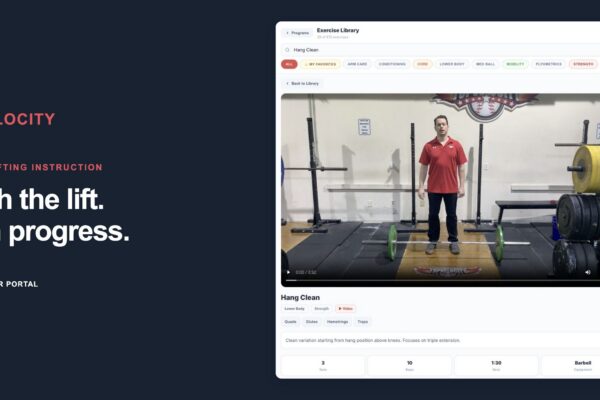
The 3X Pitching method is built on triple extension: extending the hips, knees and ankles together to push force from the ground into the throw. Its overload happens in the weight room with Olympic lifts, full-range barbell squats and medicine-ball work. Mechanics are measured with MechanicsDNA 3D analysis. The throwing arm keeps working with a regulation baseball.
To be fair, modern weighted-ball facilities don’t only throw weighted balls. Driveline, for example, is described as including recovery, mechanics, command and pitch design alongside weighted balls. This comparison is about the weighted-ball throwing component itself.
How do 3X vs weighted balls compare side by side?
| Factor | 3X Pitching (TopVelocity) | Weighted-ball programs |
|---|---|---|
| Where the overload goes | Legs, hips and trunk (Olympic lifts, squats, med balls) | The throwing arm (balls from about 2 oz to 32 oz) |
| Primary tools | Barbell, medicine balls, ground-force and trunk trainers, 3D mechanics analysis | Plyo and weighted balls, radar, throwing drills |
| Controlled evidence on velocity | Lower-body power is linked to velocity in observational studies. No randomized trial of the full 3X program | One randomized trial showed a 3.3% gain. A systematic review rated the overall evidence “very poor” |
| Controlled evidence on injury | No pitching-specific injury trial. Weightlifting injury rates are similar to other non-contact power sports | Randomized trial: 24% of the weighted-ball group injured vs. 0% of controls |
| Main risk to manage | Poor lifting technique or loads progressed too fast | Rapid gains in shoulder external rotation and higher arm stress in some drills |
| Coaching requirement | Needs a qualified coach to teach the lifts | Needs careful volume and intensity control |
| Best fit | Youth through college pitchers, arms with an injury history, athletes who need lower-body power | Older, physically mature pitchers with healthy arms and close medical or coaching oversight |
What does the research say about weighted balls?
The key study is a randomized controlled trial by Reinold and colleagues (2018, Sports Health). It included 38 healthy pitchers aged 13 to 18. The experimental group followed a six-week weighted-ball program three times a week, with balls from 2 to 32 ounces. Both groups also did a strength-training program.
- Pitch velocity rose 3.3% in the weighted-ball group.
- Shoulder external rotation increased by 4.3 degrees.
- The injury rate was 24%. Four pitchers had elbow injuries, two during the program and two the following season.
- No pitcher in the control group was injured.
A follow-up study by the same group (Reinold et al., 2020) tested 16 high-school pitchers. Light underload balls produced no change in shoulder rotation. Overload balls increased external rotation by 3.3 degrees after one session, and extreme overload balls (16 and 32 oz) increased it by 8.4 degrees. The authors advised caution with heavier balls.
Biomechanics data are more mixed. Fleisig et al. (2017) found that pitching slightly lighter or heavier balls (4 to 7 oz) from a mound did not raise arm forces and “seem reasonable.” Running crow-hop throws increased shoulder rotation speed and elbow varus torque, and the authors called them potentially “stressful and risky.”
The broader evidence is thin. A 2019 systematic review found 10 qualifying studies. Most reported velocity gains, but the reviewers rated the evidence “very poor” and found too little data to judge injury risk. A 2021 review from Mayo Clinic researchers called for standardized programs before firm conclusions can be drawn.
For a deeper look at the safety question, read Are Weighted Baseballs Safe?
What does the research say about lower-body power and velocity?
The case for 3X rests on the idea that velocity starts at the ground. A 1998 study in the American Journal of Sports Medicine found that wrist velocity correlated highly with leg drive in pitchers.
Newer studies point the same way. In 19 Division I pitchers, countermovement-jump impulse and peak power correlated with fastball velocity (r = 0.71 and 0.68) (Sakurai et al., 2024). In 32 adolescent pitchers, jump braking force and body height explained 43.3% of the variation in velocity (Hsiao & Lee, 2025).
These are correlations, not proof that training the legs will add velocity. We also want to be honest about our own research. Dr. Brent Pourciau’s dissertation tested an Olympic-lifting sequence right before pitching in 13 collegiate pitchers and found no significant immediate velocity gain. Olympic lifting is a long-term development tool, not a pre-game trick.
Does any velocity program raise arm stress?
Yes, and that point applies to 3X as well. A 2026 study in the Journal of Athletic Training gave 54 high-school pitchers eight weeks of lumbopelvic-hip strength training. Ball speed went up, and so did elbow varus moment.
Throwing harder loads the elbow more, whatever method produced the gain. Any pitcher who adds velocity should manage pitch counts, rest and workload. Our arm-care exercises and UCL warning signs guides cover what to watch.
Who is 3X Pitching best for?
- Youth and high-school pitchers whose arms are still maturing. Lifting is taught with light loads and technique first.
- Pitchers with an arm-injury history who want to build velocity without adding load to the ball.
- Athletes with weak lower-body power, such as a low vertical jump or poor drive-leg force.
- Families who want measurable mechanics. MechanicsDNA tracks hip-shoulder separation, stride and trunk position over time.
Who might a weighted-ball program fit?
- Physically mature pitchers, usually college or professional, with healthy arms and a solid strength base.
- Athletes training under close supervision, with range-of-motion checks and medical support.
- Pitchers using mostly light deviations (about 4 to 7 oz) from a mound rather than heavy balls or running throws, based on Fleisig’s findings.
If you’re already on a weighted-ball program, watch for sudden gains in shoulder layback and elbow pain, and talk to a sports-medicine professional.
Can you combine 3X and weighted balls?
Some programs do. Our coaching position is to avoid heavy weighted-ball and running-throw work in developing arms, given the injury data above. Light underload and overload balls thrown from a mound are a different, lower-stress stimulus, according to the Fleisig data.
If you combine methods, add one variable at a time. Track velocity and range of motion, and don’t stack high-intent throwing days on top of heavy lifting days.
3X vs weighted balls: how do you decide?
- Check the age. Compare your pitcher to pitching velocity by age benchmarks before chasing more speed.
- Test the lower body. A low vertical jump with a strong arm usually points to power the legs aren’t delivering. See the best lifts for pitchers.
- Get a mechanics baseline. The free MechanicsDNA Mini scores five markers from one video.
- Estimate the ceiling. Our velocity calculator projects potential from body and power data.
Frequently asked questions
Is 3X Pitching better than weighted balls?
It depends on the pitcher. 3X puts overload on the legs, hips and trunk rather than the arm, which suits youth pitchers and arms with an injury history. The best weighted-ball trial found a 3.3% velocity gain and a 24% injury rate, while neither approach has a randomized trial of a full commercial program.
Do weighted balls increase pitching velocity?
Usually, yes. A randomized trial of pitchers aged 13 to 18 found a 3.3% velocity increase after six weeks, and most studies in a 2019 systematic review reported gains. That review also rated the evidence very poor in quality.
Are weighted balls safe for youth pitchers?
The best evidence is a caution. In the 2018 randomized trial by Reinold and colleagues, 24% of pitchers in the weighted-ball group were injured, compared with none in the control group, and shoulder external rotation rose 4.3 degrees.
Does Olympic lifting increase pitching velocity?
Lower-body power is correlated with fastball velocity, and Olympic lifting improves jump performance in athletes. No randomized trial has yet tested Olympic lifting alone for pitching velocity, and Dr. Pourciau’s own study found no immediate velocity boost from lifting right before pitching.
Can I use weighted balls and 3X together?
Some pitchers do. TopVelocity advises avoiding heavy weighted balls and running throws in developing arms. If you combine methods, add one change at a time, track velocity and range of motion, and avoid stacking hard throwing days on heavy lifting days.
Does Driveline only use weighted balls?
No. Driveline Baseball is best known for weighted-ball training, but its program also covers recovery, mechanics, command, pitch design and data tracking. This comparison focuses on the weighted-ball throwing component.
Try 3X training
Still weighing 3X vs weighted balls? Start a 7-day free trial of the TopVelocity Player Portal to see the 3X program, lifting progressions and MechanicsDNA tracking. If you want hands-on coaching, the 3X Velocity Camp in Covington, Louisiana, includes a biomechanics evaluation and one-on-one work with Dr. Pourciau. You can also read the pros and cons of the camp before you decide.
About the author
Dr. Brent Pourciau is the founder of TopVelocity and creator of 3X Pitching and MechanicsDNA. He holds a PhD in Health Sciences (Exercise and Sport Science) from Liberty University, where his dissertation studied Olympic-lifting post-activation potentiation and pitching velocity, and an M.S. in Kinesiology. He pitched professionally for the San Diego Surf Dawgs and has spent more than 20 years building TopVelocity in Covington, Louisiana.