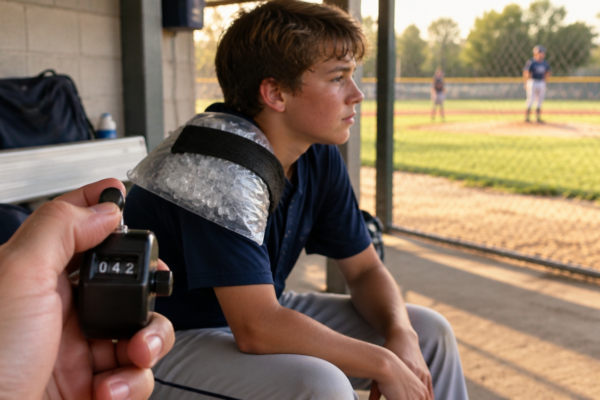


If you’re a pitcher who throws hard but can’t figure out why you’re not throwing harder — or a parent worried about your kid’s arm — the problem is almost always something you can’t see with the naked eye. That’s where pitching mechanics analysis in 3D changes everything. A pitching delivery happens in under a second. The single biggest velocity driver, hip-to-shoulder separation, opens and closes in roughly 0.145 seconds. Your eyes physically cannot catch it. A camera and 3D motion analysis can.
That’s exactly what TopVelocity’s MechanicsDNA does. Film one pitch on your phone, mark five key moments, and get a pro-style 3D breakdown of your mechanics — including a brand-new 3D Analysis viewer that lets you rotate, pan, and fly through your entire delivery in 360°. Below, we’ll walk through exactly how it works and why it matters for velocity and arm health.
See the MechanicsDNA starting point
The upload screen shows where the MechanicsDNA workflow starts. Review the displayed video requirements before recording, and use a demonstration to understand the next steps. This setup preview contains no athlete analysis or measurement result.
Pitching Mechanics Analysis in 3D — What Is MechanicsDNA?
MechanicsDNA is a pitching mechanics analysis in 3D tool inside the TopVelocity player portal. It uses 3D motion-capture technology to break your delivery into the same checkpoints pro scouts and biomechanists grade — then scores each one on a 20–80 scouting scale. You don’t need sensors, a lab, or expensive equipment. You need your phone and one pitch on video.

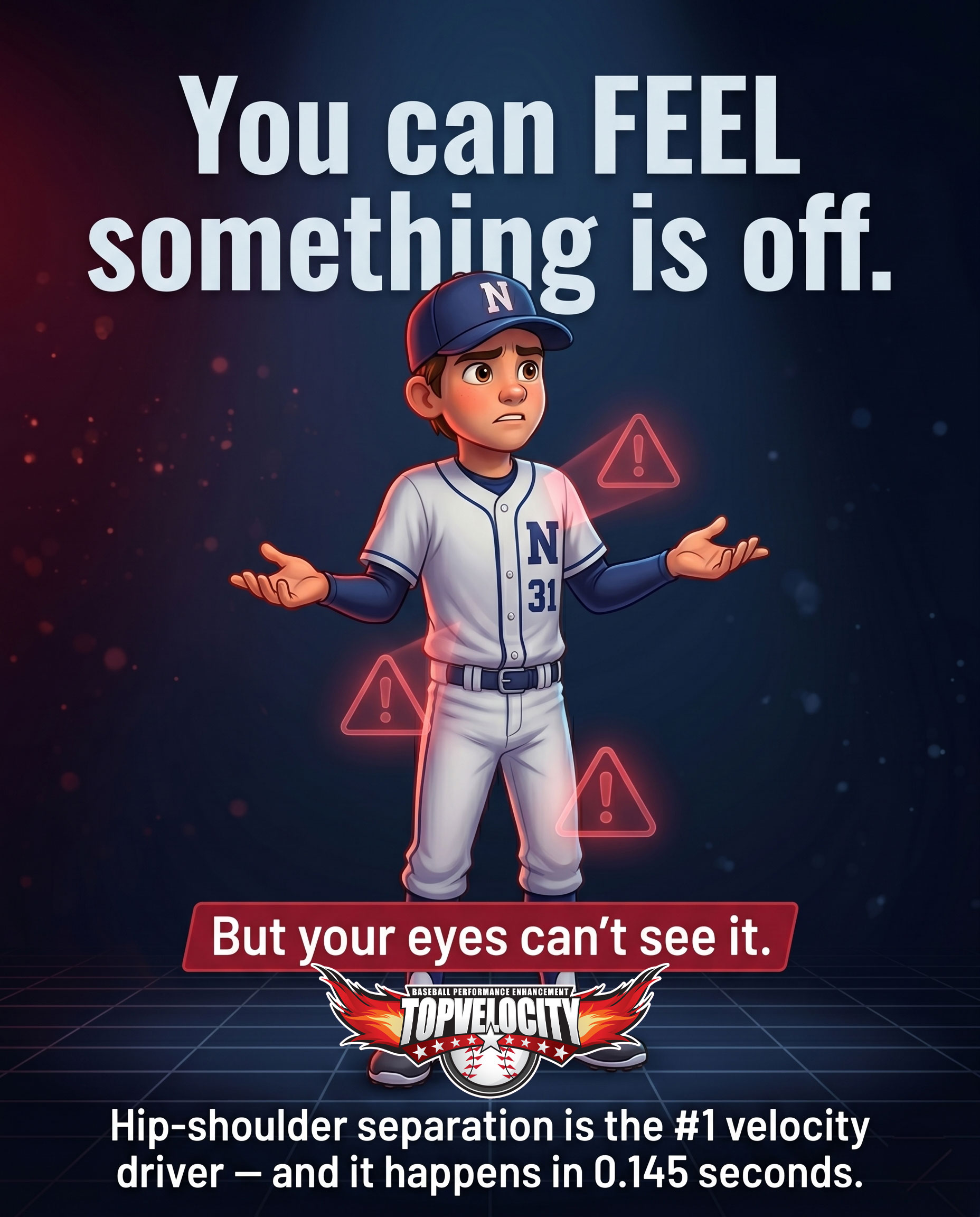
Why you can feel something is wrong but can’t see it
Almost every pitcher knows the feeling: the ball isn’t jumping out of your hand the way it should, but you can’t pinpoint why. That’s because the mechanics that create velocity happen faster than human vision can process.

Hip-to-shoulder separation — the moment your hips fire open while your shoulders stay closed, creating a rubber-band stretch across your torso — is the most important velocity driver in the entire delivery. Research backs this up: one study of 420 youth and adolescent pitchers found that age, height, hip-shoulder separation, and stride length together explained 78% of the variance in pitch velocity, with separation alone associated with a meaningful velocity gain (Sgroi et al., 2015, Journal of Shoulder and Elbow Surgery). Elite pitchers separate roughly 46–54° at foot plant. You cannot eyeball that. You have to measure it.
The Breakthrough: Pitching Mechanics Analysis in 3D — See Your Delivery Fully
This is what we’re most excited about. The new 3D Analysis viewer takes the motion data from your video and builds a true three-dimensional model of your delivery. You can rotate it, pan around it, switch between FRONT, SIDE, and TOP views, and scrub frame-by-frame through the entire motion — from leg lift all the way to ball release.
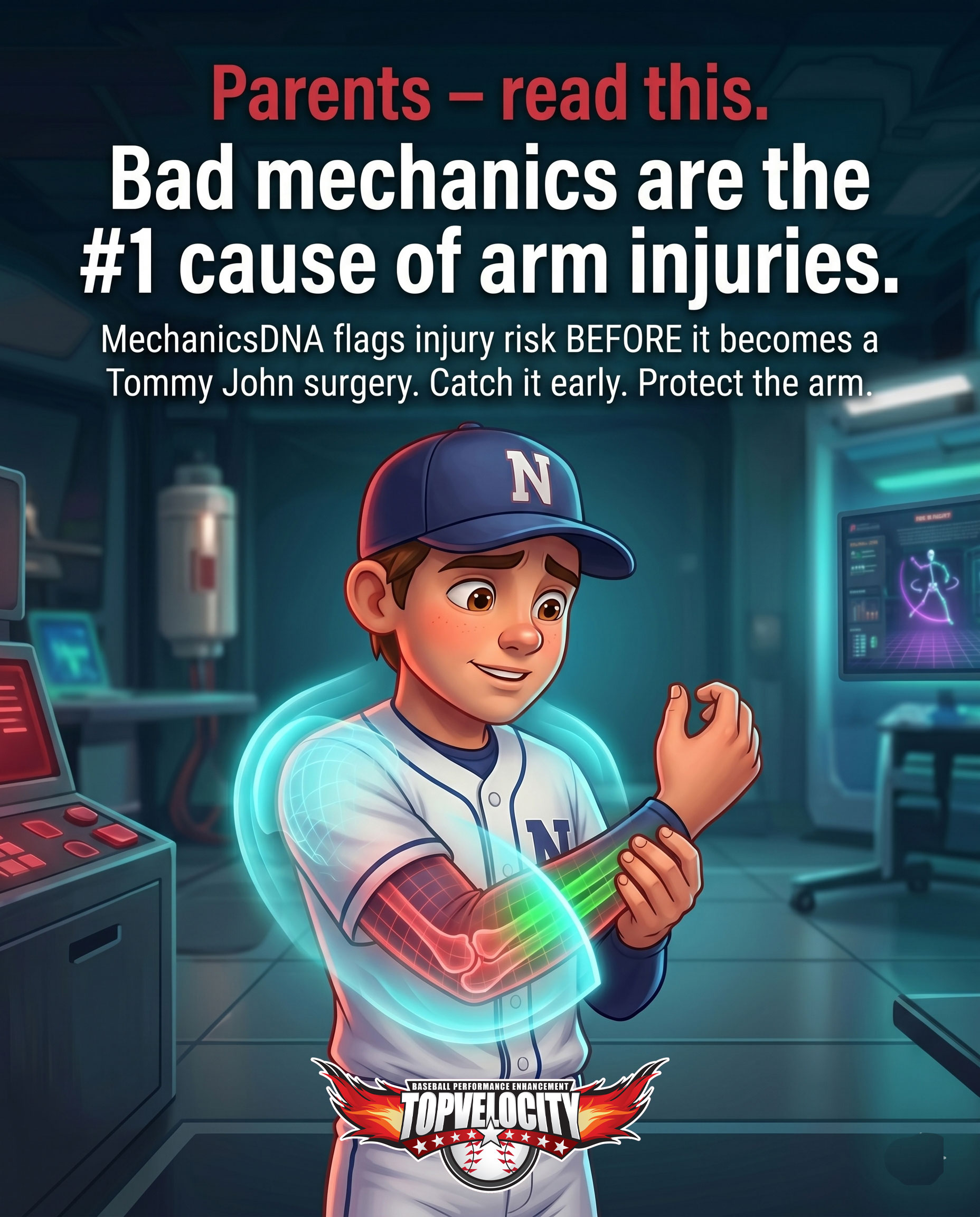
This matters because pitching is a 3D movement, and a flat side-view video hides huge amounts of information. Rotation happens in planes a single camera angle simply can’t show. Being able to spin your own delivery in 360° is the closest thing to standing inside a pro biomechanics lab — except it’s on your phone.
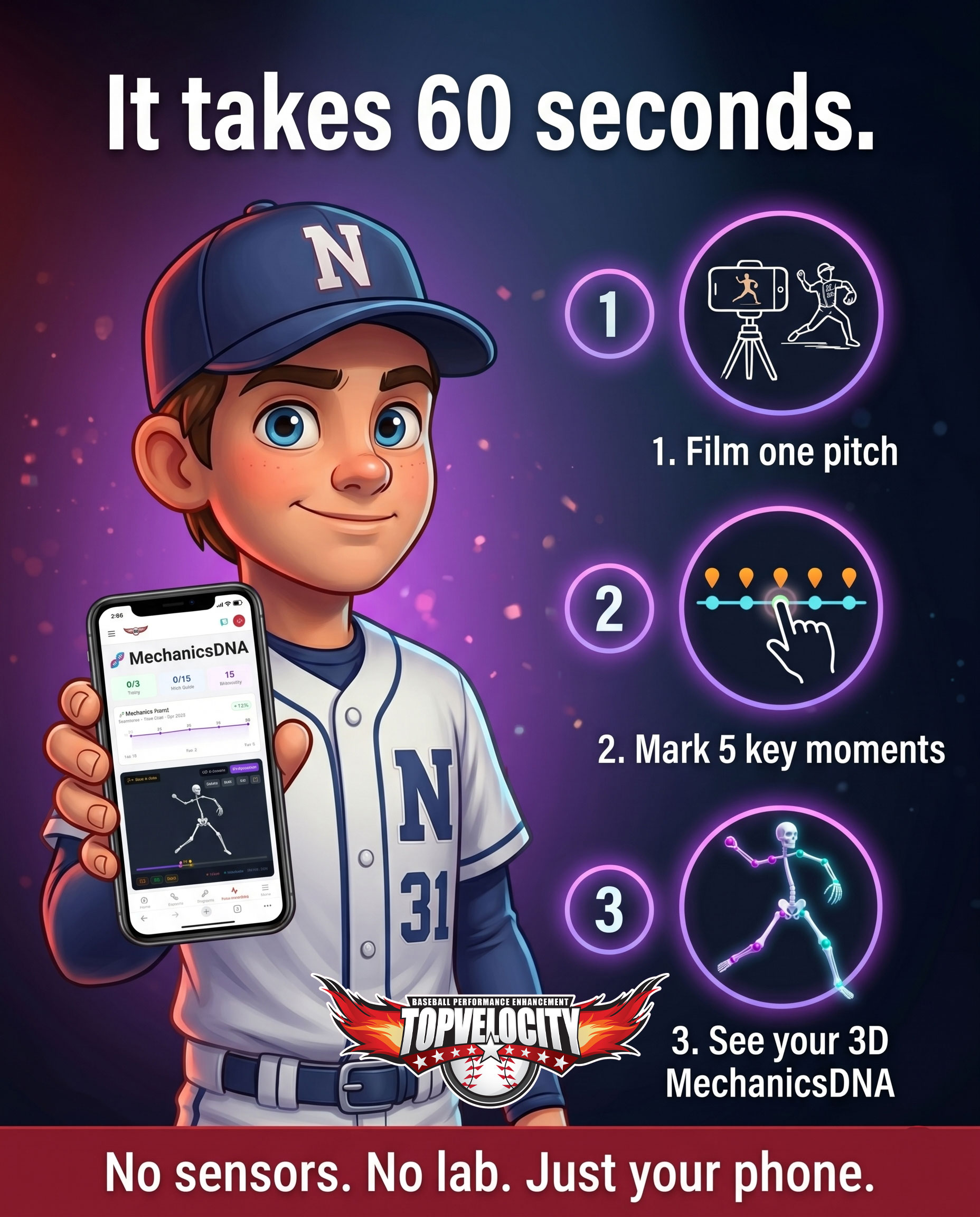
How it works: 3 steps, about 60 seconds
You don’t need to be technical. The entire process takes about a minute.
Step 1 — Film one pitch
Record a single pitch from the side (glove-side view), full body in frame, landscape orientation. Slow-motion (120–240 fps) gives the best results.
Step 2 — Mark 5 key moments
Tap through the video to mark the five events of the delivery: Leg Lift, Leg Drive, Foot Plant, MER (maximum external rotation), and Ball Release.
Step 3 — Get your 3D MechanicsDNA
The app processes the motion and returns your full 3D model, your scores, and your personalized focus area.
Every pitch gets a pro-style score
MechanicsDNA grades each checkpoint of your delivery on the same 20–80 scouting scale used throughout professional baseball. You get an overall mechanics score, an injury-risk flag, and a clear “#1 focus area” telling you exactly where the biggest velocity gain is hiding.

Instead of guessing, you know your weak link. Fix the weak link, and the velocity follows.
Built for arm health, not just velocity (parents, read this)
Velocity is what gets attention, but arm safety is what keeps a young player in the game. Inefficient mechanics force the arm to make up for energy the body should have generated through the legs and core — and that’s where overuse injuries start.
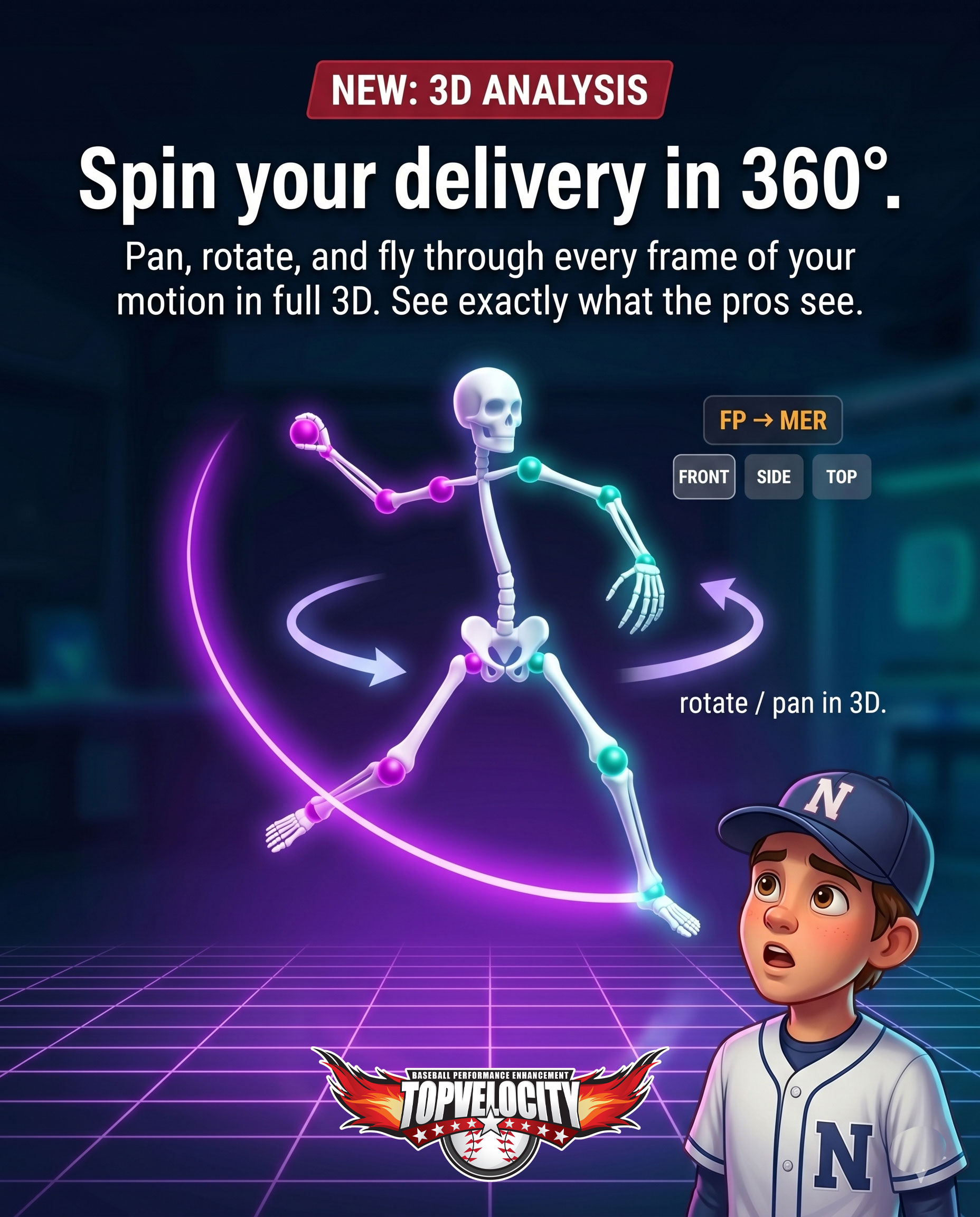
MechanicsDNA flags injury-risk patterns early — before they become a serious problem. Catching a mechanical flaw at age 13 is infinitely better than discovering it after an elbow injury at 16.
Track Your Pitching Mechanics Analysis in 3D Progress Over Time
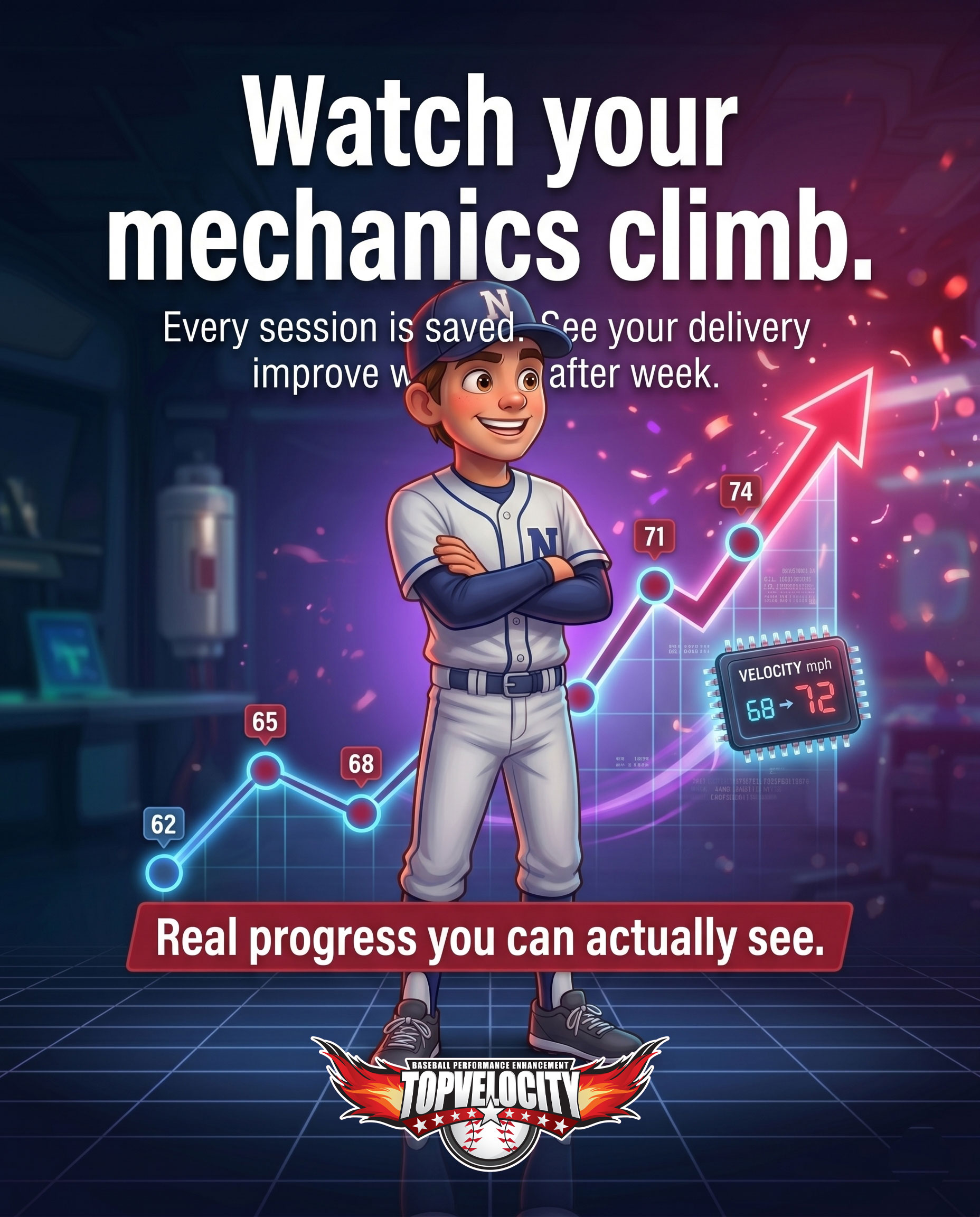
Every session you run is saved, so you can watch your mechanics score climb week after week. This is the part players love: real, visual proof that the work is paying off.
Pitching Mechanics Analysis in 3D: Backed by 20+ Years and Peer-Reviewed Science
MechanicsDNA isn’t a gimmick. It’s built on the same 3X Pitching Velocity science behind 100+ MLB draft picks and 10,000+ athletes trained over more than two decades. The methodology is grounded in kinetic-chain biomechanics, force production, and peer-reviewed sports science.
Try MechanicsDNA free
You can analyze your delivery right now — no equipment, no lab, just your phone. Stop guessing what’s holding your velocity back and start seeing it.
Try MechanicsDNA Free → topvelocity.org
Frequently asked questions
Do I need special sensors or equipment to use MechanicsDNA?
No. MechanicsDNA works from a single phone video. You don’t need wearable sensors or a motion-capture lab.
What video do I need to film?
One pitch, filmed from the glove side, full body in frame, landscape orientation. Slow-motion footage between 120 and 240 fps produces the most accurate 3D results.
What is hip-to-shoulder separation and why does it matter?
It’s the angle between your hips and shoulders at foot plant, created when the hips open while the shoulders stay closed. It’s the single biggest mechanical driver of pitching velocity, and research links greater separation to higher ball speed.
Can Pitching Mechanics Analysis Help Prevent Arm Injuries?
It is designed to flag injury-risk mechanics early. Identifying and correcting inefficient patterns reduces the unnecessary stress that leads to overuse injuries, though it is an analysis tool and not a medical device.
How Long Does a Pitching Mechanics Analysis Take?
About 60 seconds: film one pitch, mark five key moments, and review your 3D breakdown and scores.
Is MechanicsDNA good for youth pitchers?
Yes. It’s built for players at every level, and catching mechanical issues early is especially valuable for developing youth athletes.
Sources: Sgroi, T., et al. (2015). Predictors of throwing velocity in youth and adolescent pitchers. Journal of Shoulder and Elbow Surgery, 24(9), 1339–1345. Fortenbaugh, D., Fleisig, G. S., & Andrews, J. R. (2009). Baseball Pitching Biomechanics in Relation to Injury Risk and Performance. Sports Health, 1(4), 314–320.