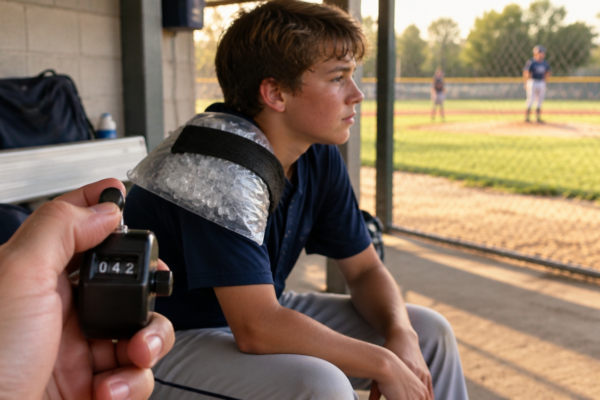

An unexpected pitching appearance changes more than the throwing log. It can change the purpose of the next bullpen, the timing of strength work and the information the next coach needs. An in-season plan becomes useful when those decisions are connected.
TopVelocity’s approach is to coordinate throwing, physical preparation and movement training around the athlete’s actual week. Keep the development priorities visible, record what happened and give one staff member responsibility for reconciling changes. A calendar should help coaches make that decision, rather than pressure the pitcher to complete every session originally written.
Make the next assignment easy to find
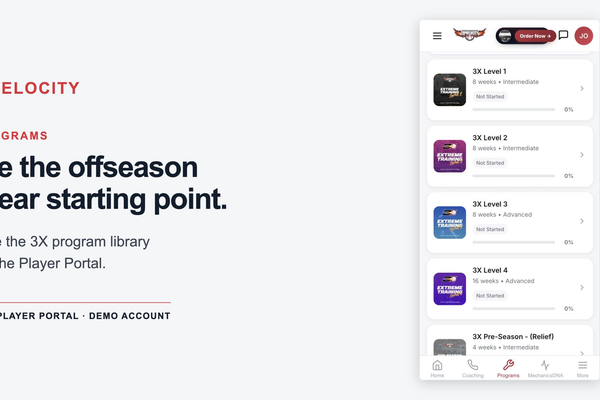
The Player Portal demo above puts a training assignment and a learning task in Today’s Game Plan. That is the player-facing experience: open the dashboard and see the next task. The sample includes 2X training and 3X Pitching 101 education; a pitcher’s actual program must match the coach’s plan.
The staff coordination board below is a coaching worksheet, not a screenshot of an automated scheduling feature. In an organization demo, ask TopVelocity to show how your staff’s plan reaches the player. Ready to bring the platform to your team or facility? Review organization plans and register.
Keep the purpose of 3X training visible during the season
The 3X curriculum combines mobility, drill-based throwing, medicine-ball work, Olympic-based strength work and conditioning. Its in-season program material describes adapting throwing and physical work for starting and relief roles. These components give a staff tools to select from; they do not require every pitcher to complete every component at every opportunity.
In-season coordination starts by naming the role of each activity. A medicine-ball task might reinforce an agreed movement relationship. Strength work might maintain a selected physical quality. A bullpen might serve pitch execution or preparation for competition. When staff cannot explain the purpose, they cannot sensibly decide what to adjust after the schedule changes.
Keep a development priority alongside the competitive priority. The pitcher still needs a plan beyond the next appearance, but the training emphasis must fit the opportunities and responsibilities of the current week.
Starters and relievers need different planning conversations
For a starter, plan around an expected appearance and update it
A projected start gives the staff a useful reference point. Work backward from that appearance to identify preparation, pitching practice and physical work. Then ask what might change: weather, travel, a shortened outing, an extended outing or a different role.
The projected start is a planning anchor, not evidence that the athlete will respond to training on a fixed schedule. Record actual throwing and athlete feedback after the appearance. Before the next physical session, the strength coach should know whether the week still resembles the week that was planned.
For a reliever, prepare options before availability changes
A reliever may not know the timing or demands of the next game appearance. Instead of relying on one inflexible weekly sequence, staff can prepare alternative versions of the planned work. Each version should retain a clear purpose and specify who decides whether it fits the day’s information.
The relevant update includes game use and preparatory throwing. Record bullpen warm-ups even when they do not lead to an appearance. Keep context rather than collapsing everything into one unexplained total: game pitches, bullpen work, catch and physical training answer different questions.
Training outside the bullpen can affect pitching performance
In Tremblay and colleagues’ 2024 pilot study, 16 male academy pitchers aged 15–19 were recruited for upper-body and lower-body fatigue protocols, with 15 observations in each condition. Pitching velocity declined after deliberately taxing push-up and repeated-jump exercise. The crossover order was assigned by the coach, rather than randomized, and there was no nonfatiguing control condition.
This small preseason study supports paying attention to physical work before an important pitching exposure. It does not establish that every strength session reduces velocity, identify an ideal in-season training day or determine how long an individual needs to recover.
Mullaney and colleagues studied 13 university and independent minor-league pitchers before and after 19 games. They found selective postgame reductions in measured shoulder strength, with different responses across the muscle actions assessed. It was a descriptive study, not a test of a weekly lifting schedule. It also did not establish a recovery deadline or show that a normal-looking movement means the athlete has recovered.
The staff application is modest and useful: interpret a pitching appearance alongside the wider training context, and avoid assigning the same meaning to every measure of readiness.
Use one board for the planned and actual week
The board below is a proposed staff worksheet. The entries illustrate what to record; they are not a real player’s history or a prescribed schedule. Keep these fields in a shared document or the organization’s existing coaching records.
| Field | Planned entry | Actual update and decision |
|---|---|---|
| Pitching role | Relief availability; technical bullpen if unused. | Unexpected appearance occurred. Record the actual role and throwing before reassessing the bullpen. |
| Throwing exposure | List catch, warm-up and bullpen tasks separately. | Enter completed work, including warm-ups that did not become game appearances. |
| Physical-work purpose | Maintain an agreed strength quality using familiar exercises. | Strength coach reviews the updated week, records any change and preserves the intended purpose where appropriate. |
| Athlete response | Check in before the next planned session. | Record what the athlete reports; route clinical concerns to the responsible professional. |
| Next important exposure | Expected availability or pitching practice. | Update the expectation and identify which optional work needs reconsideration. |
| Decision owner | Named coordinator and next review time. | Document the agreed revision and confirm that the pitcher and relevant coaches received it. |
Fictional example: a relief appearance replaces the assumed easy day
A reliever is scheduled for a technical bullpen and familiar strength work later in the week. The planning assumption is that he will have a limited competitive role beforehand. He is unexpectedly used in a game, making that assumption outdated.
The staff coordinator first collects the actual throwing information and the athlete’s response. The pitching coach reviews whether the technical bullpen still serves the same purpose. The strength coach reviews the planned physical work using the new context. Neither coach assumes the other has already made the adjustment.
The resulting decision could be to retain, modify or reschedule an activity. The example does not prescribe which choice every reliever should make. Its point is that the decision follows the updated information, with the reason recorded and communicated. Any clinical concern is assessed through the organization’s clinical process.
Preserve strength skills without turning every session into a test
TopVelocity’s individualized preparation approach starts with the athlete’s needs and training background. During the season, retain that principle when selecting physical work. A familiar exercise and a clear technical objective can make a session easier to supervise and evaluate.
An athlete learning a new Olympic-lifting variation has a teaching demand as well as a physical demand. The strength coach should account for both when the competitive schedule becomes less predictable. A completed lift, a heavier load and successful pitching preparation are different outcomes; the training record should identify the outcome the session actually targeted.
For the teaching side of physical work, use the Olympic-lifting skill progression. For the longer development window between seasons, see the 3X offseason planning guide.
Give one person responsibility for the final plan
Choose a coordinator to reconcile the schedule, not to replace specialist judgment. The pitching coach owns the throwing purpose, the strength coach owns the physical prescription, and medical staff retain clinical authority. The coordinator makes sure their decisions reach the athlete as one understandable plan.
At each review, answer three questions: what changed, what does it affect, and who needs the update? That habit keeps 3X development work connected to the season the pitcher is actually having.
For teams, academies and facilities: request a TopVelocity organization demo to review coaching support and program-management workflows, or explore organization registration.
For professional player-development staffs: discuss a defined coaching or development project with Brent Pourciau, including your athletes’ roles, existing staff responsibilities and the planning problem you want to solve.