A small independent baseball facility can absolutely compete with the big data-driven training labs — but not by buying more machines. The large analytics brands win on perceived technology and marketing budget, two things you’ll never out-spend. You beat them on the one thing money can’t shortcut: a validated development system, national benchmarking, and a coach who knows the family’s name. Here’s the realistic playbook.
First, the good news about the landscape: raw data has become a commodity. The expensive part used to be the hardware; now phone-based 3D analysis and cloud benchmarking deliver comparable insight at a fraction of the cost. The moat for the big labs was never the sensors — it was the interpretation and the system around them. And a system can be licensed overnight. The machines can’t be your differentiator anymore, which is exactly why you can win.
For facility owners looking to implement data-driven coaching, explore how pitching velocity programs can give your small baseball facility a competitive edge.
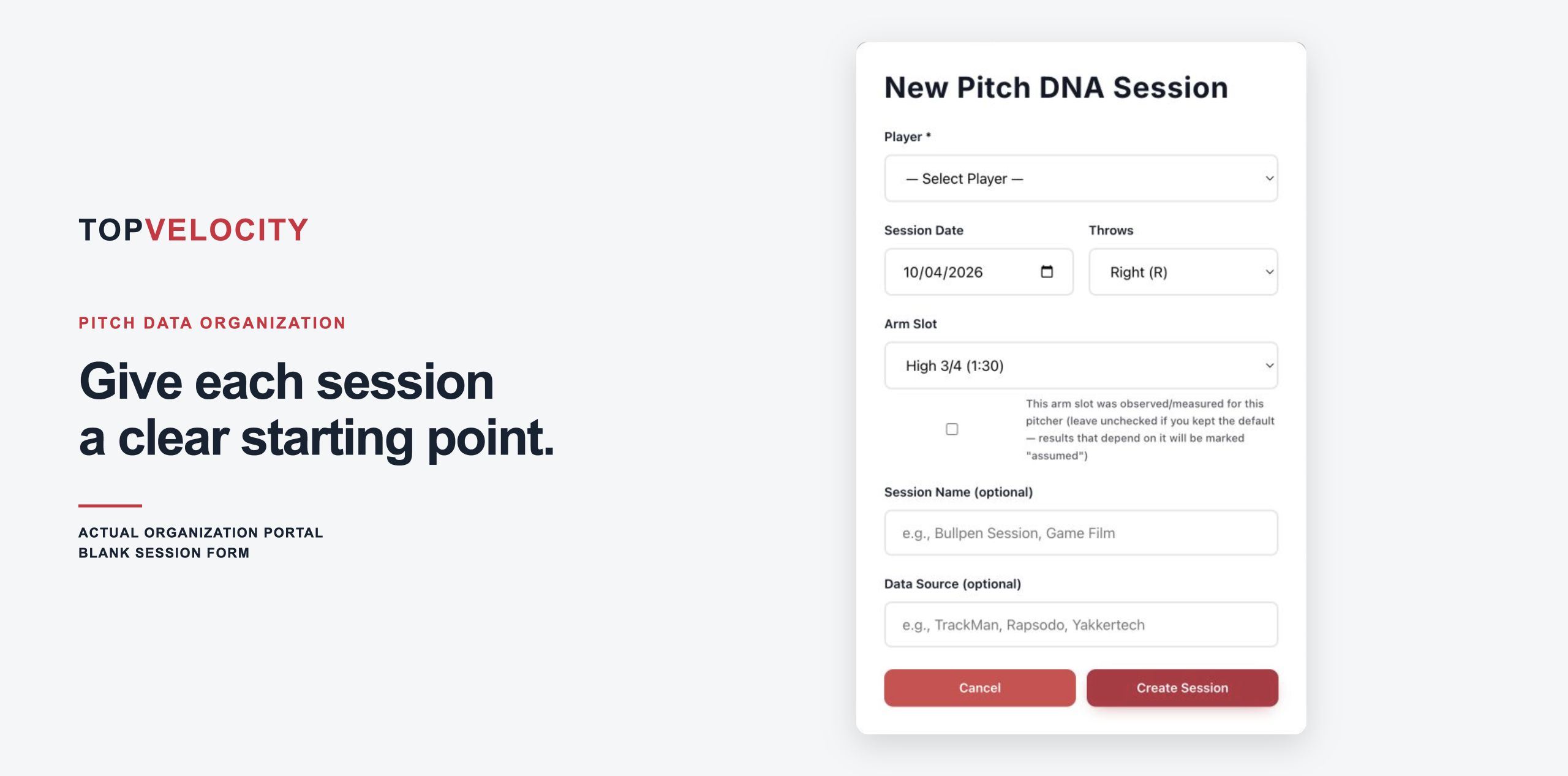
See the pitch-session starting point
The New Pitch DNA Session window gives facility owners a specific workflow to inspect. Ask what information and equipment are required, who enters the data and how a coach reviews it before deciding whether the tool fits your services.
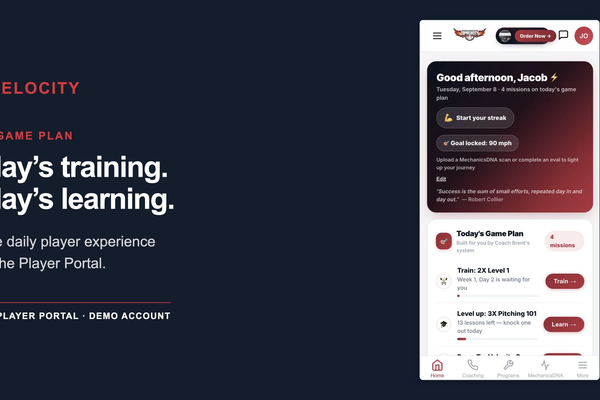
See the organization portal demo or compare organization plans and register.
Where a Small Baseball Facility Can Beat the Big Labs
The large data-driven facilities have three weaknesses an independent operator can exploit:
- They sell data; families want a plan. A wall of numbers impresses on the tour and overwhelms by week two. A small facility that turns the same data into a clear, prescribed development plan — and a coach who explains it — wins the parent who’s drowning in metrics.
- They’re not local. You know the kid, the high school coach, the travel schedule. National brands can’t manufacture relationship. Retention runs on relationship, and keeping a member costs about five times less than acquiring one (Bain & Company).
- Their methods overload the arm. Much of the analytics-driven velocity world still leans on arm-overload training that injured 24% of participants in a randomized trial (we covered the evidence in Are Weighted Baseballs Safe?). A small facility built on ground-force mechanics and injury screening can win every safety-conscious parent in town — and that’s most of them.
How to Get Enterprise-Grade Tech Without the Capex
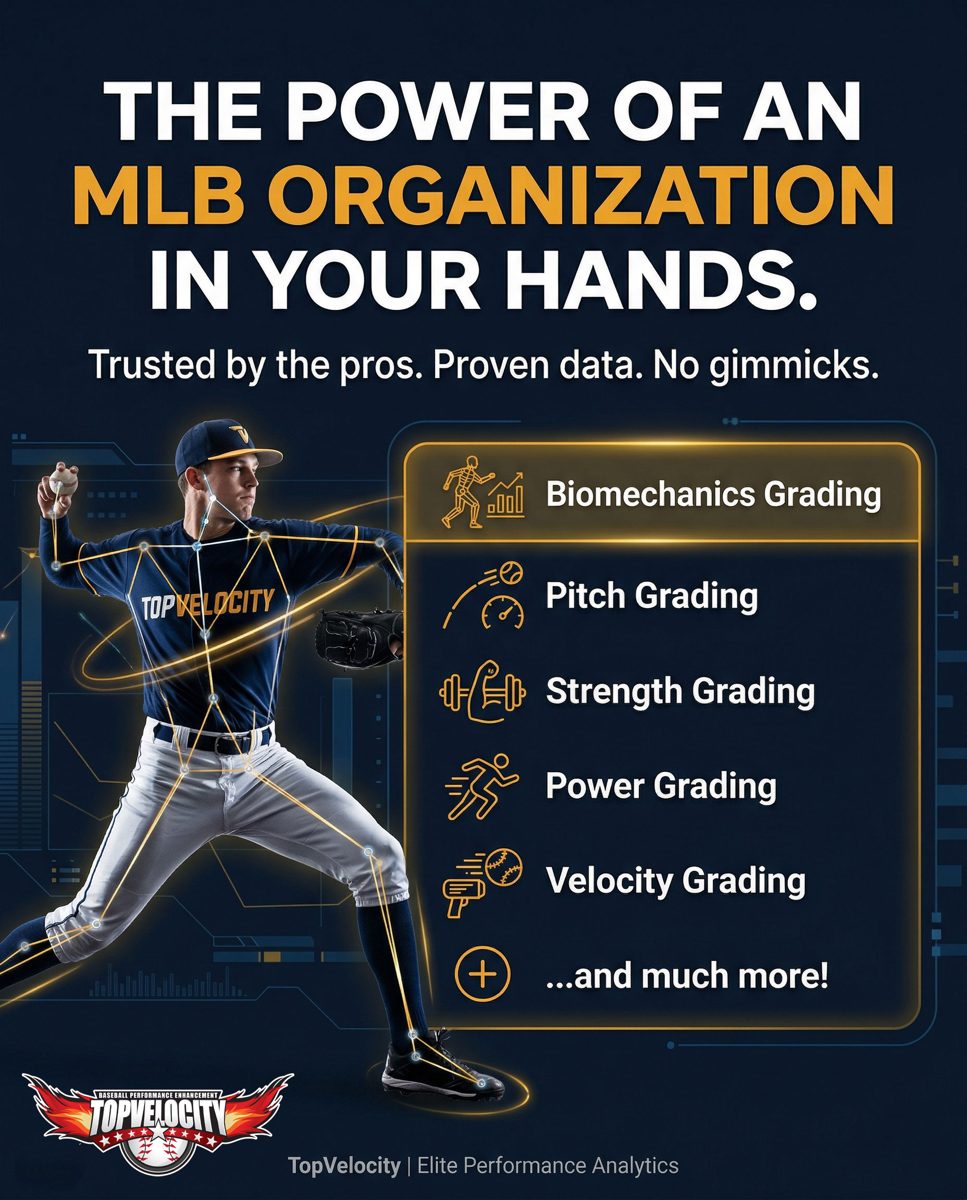
You don’t need a seven-figure lab. Licensing a player-development platform gives an independent facility the same caliber of technology the big brands market — without building it:
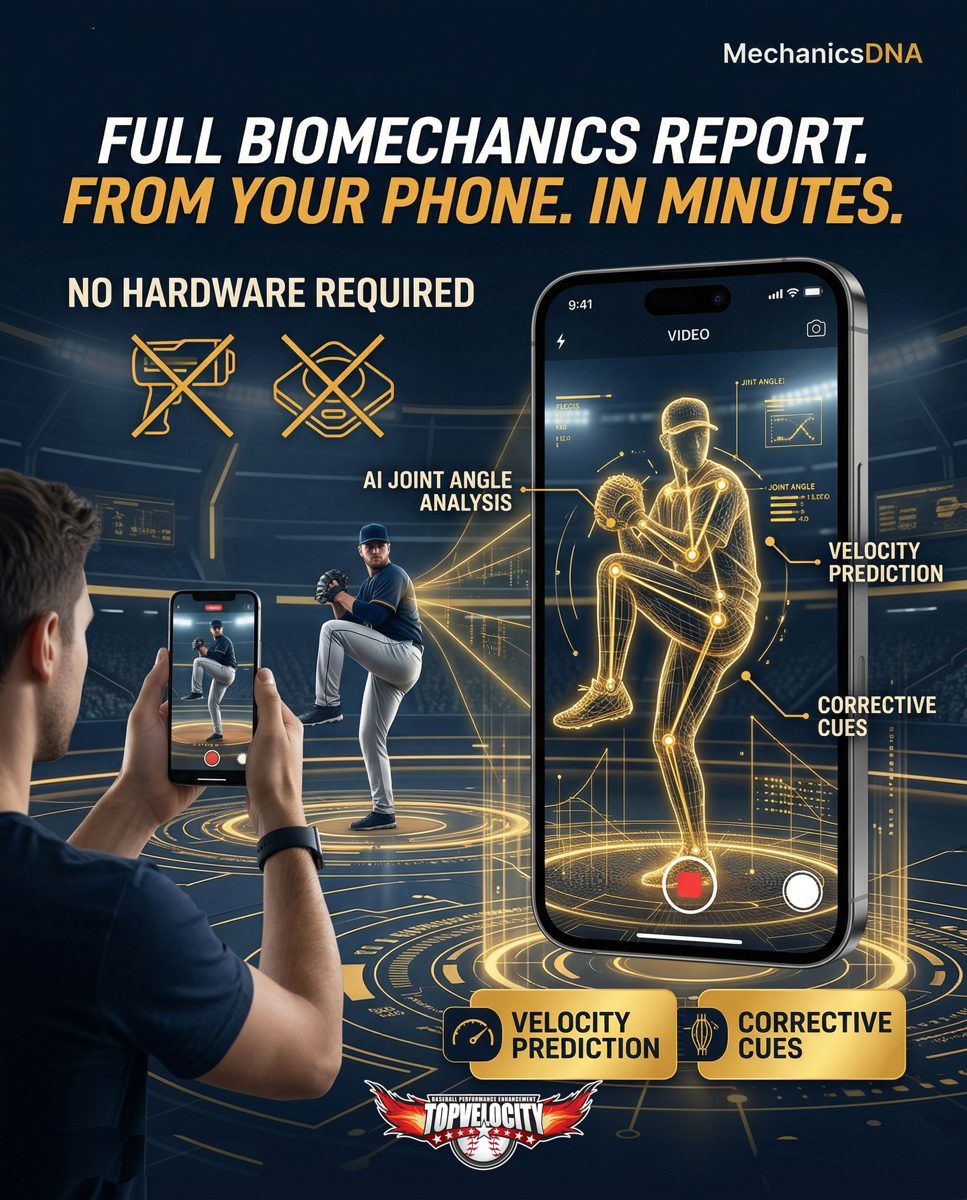
For $1,250–$2,500 a month, the TopVelocity Performance Center license includes MechanicsDNA 3D mechanics analysis, PitchDNA, ForceIQ force testing, AI evaluations scored against a national database, 15+ training programs, the org portal, and coach certification. That last piece is the real equalizer: national-percentile benchmarking means a family in your town can see exactly where their son ranks against athletes everywhere — the credibility the big labs charge a premium for, available to you in about 30 days.
Small Baseball Facility Positioning That Wins
Don’t market yourself as a cheaper version of the big lab. Market yourself as the facility where the data comes with a plan, the coaching comes with a relationship, and the training is built to make pitchers better and healthier. That’s not the underdog position — given how many families are intimidated and underserved by pure-data shops, it’s the stronger one. The science backs you, the locality backs you, and a licensed platform gives you the proof.
See the Math for Your Facility
Model your numbers in the free Performance Center Revenue Calculator, then ask Coach Brent’s AI how an independent facility your size competes in your market — it answers facility questions directly and can set up a demo. If you’re earlier in the journey, start with how to start a baseball training facility. You don’t beat the big labs by becoming them. You beat them by being the thing they can’t be: local, science-based, and genuinely invested in the athlete.
💬 Talk to Brent — Free, No Signup
Frequently Asked Questions
Not by buying more machines – raw data is now a commodity. Small facilities win on a validated development system, national-percentile benchmarking, local relationships, and a safety-first method. Licensing a platform delivers the same enterprise-grade tech the big brands market, in about 30 days, without a lab build.
No. Phone-based 3D analysis and cloud benchmarking now deliver comparable insight at a fraction of the old hardware cost. The differentiator was never the sensors – it was the interpretation and the system around them, both of which an independent facility can license rather than build.
Three: they sell overwhelming data instead of a clear plan, they can’t replicate local relationships that drive retention, and many still lean on arm-overload methods that carry real injury risk. A small, science-based, relationship-driven facility can win the safety-conscious majority of parents.
TopVelocity Performance Center licensing runs $1,250-$2,500/month by roster size and includes MechanicsDNA 3D analysis, PitchDNA, ForceIQ testing, AI evaluations against a national database, 15+ programs, the org portal, and coach certification – versus the six- to seven-figure cost of building a comparable lab.
About the Author
Brent Pourciau, M.S., is the founder of TopVelocity. After tearing his rotator cuff at 18 and being told he would never pitch again, he rebuilt his delivery through peer-reviewed biomechanics research and returned to throw 94 mph in professional baseball. He holds a master’s degree in kinesiology with doctoral work in health sciences, and has trained 10,000+ athletes including 100+ MLB draft picks through the TopVelocity Player Portal and Performance Center licensing program.