Every travel ball organization makes most of its money the same seasonal way — team fees and tournament entries — then go dark for months while families take their development dollars elsewhere. The organizations that have built a durable business added a year-round revenue stream that families pay into twelve months a year: structured player development. Here’s how the model works, why it also fixes your offseason attrition, and what it earns.
Start with the demand you’re already sitting on. Travel families spend an average of $2,178 in team fees and $1,000–$5,000 a year all-in. They are spending on development regardless — the only question is whether your organization captures the off-season portion or watches it walk to a local facility.
Why the Travel Ball Organization Tournament Model Is a Treadmill
Tournament and team-fee revenue has two structural problems. It’s one-time and seasonal — you re-earn it from zero every year, and it disappears entirely in the off-months. And it’s a treadmill: the only way to grow is more teams and more tournaments, which means more overhead, more coaches, and more weekends. You’re working harder each season to stand in place.
The durable asset isn’t another tournament. It’s player development that families pay for year-round — recurring revenue that compounds instead of resetting, and that you own.
The Offseason Attrition Problem (and What Actually Causes It)
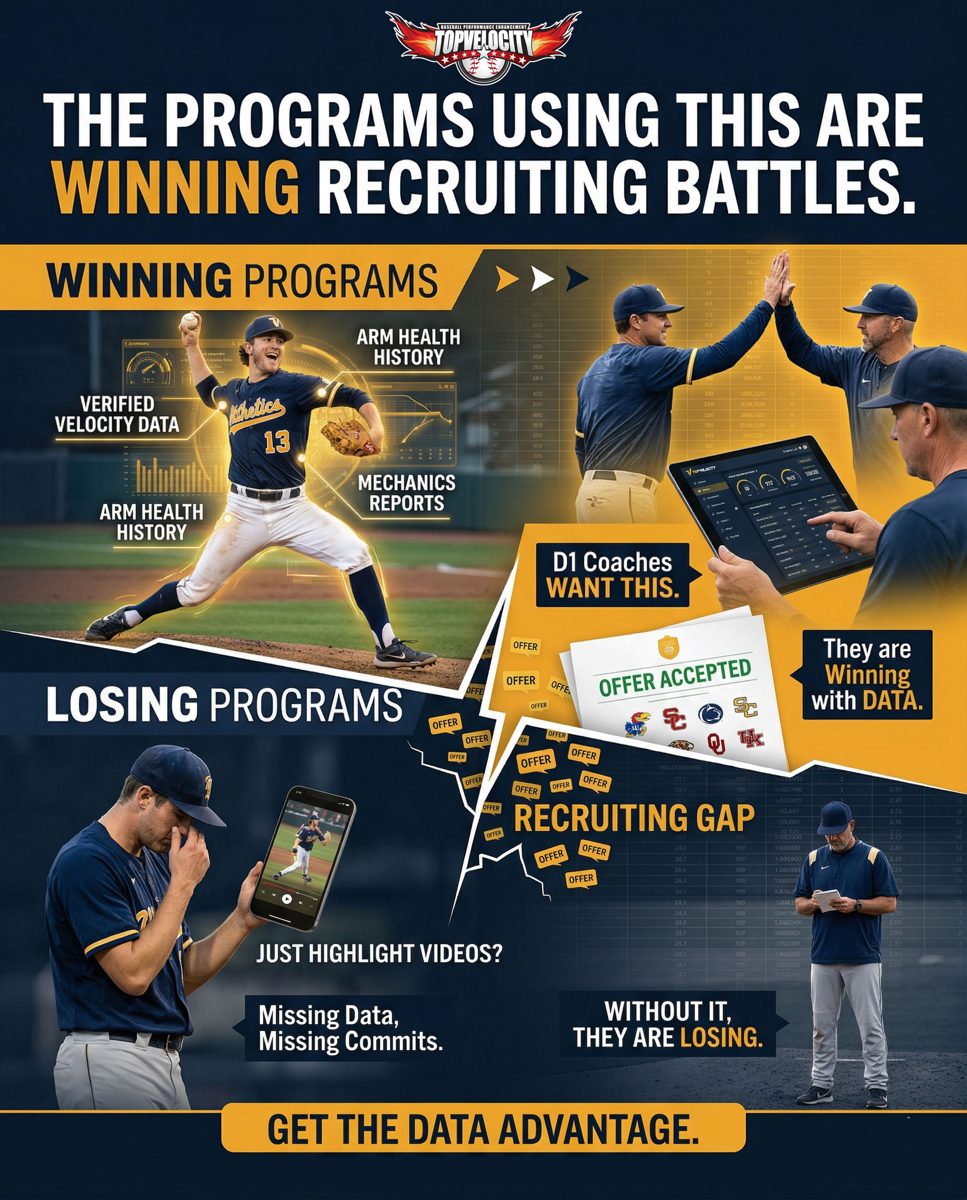
Every director knows the off-season is when players leave. The usual assumption is that they leave over playing time or politics. Often, they leave over something simpler: they can’t see development happening. A family that gets no measurable progress between seasons starts shopping. Conversely, a player who can watch his velocity, mechanics grade, and national percentile improving month over month has a concrete reason to stay — and to keep paying.
Measured development is the retention tool. Acquiring a new family costs roughly five times more than keeping one (Bain & Company), so the off-season program doesn’t just add revenue — it protects the revenue you already have.
How a Travel Ball Organization Builds a Year-Round Revenue Stream
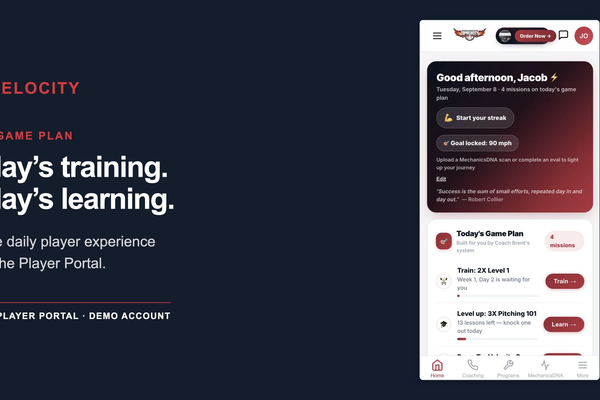
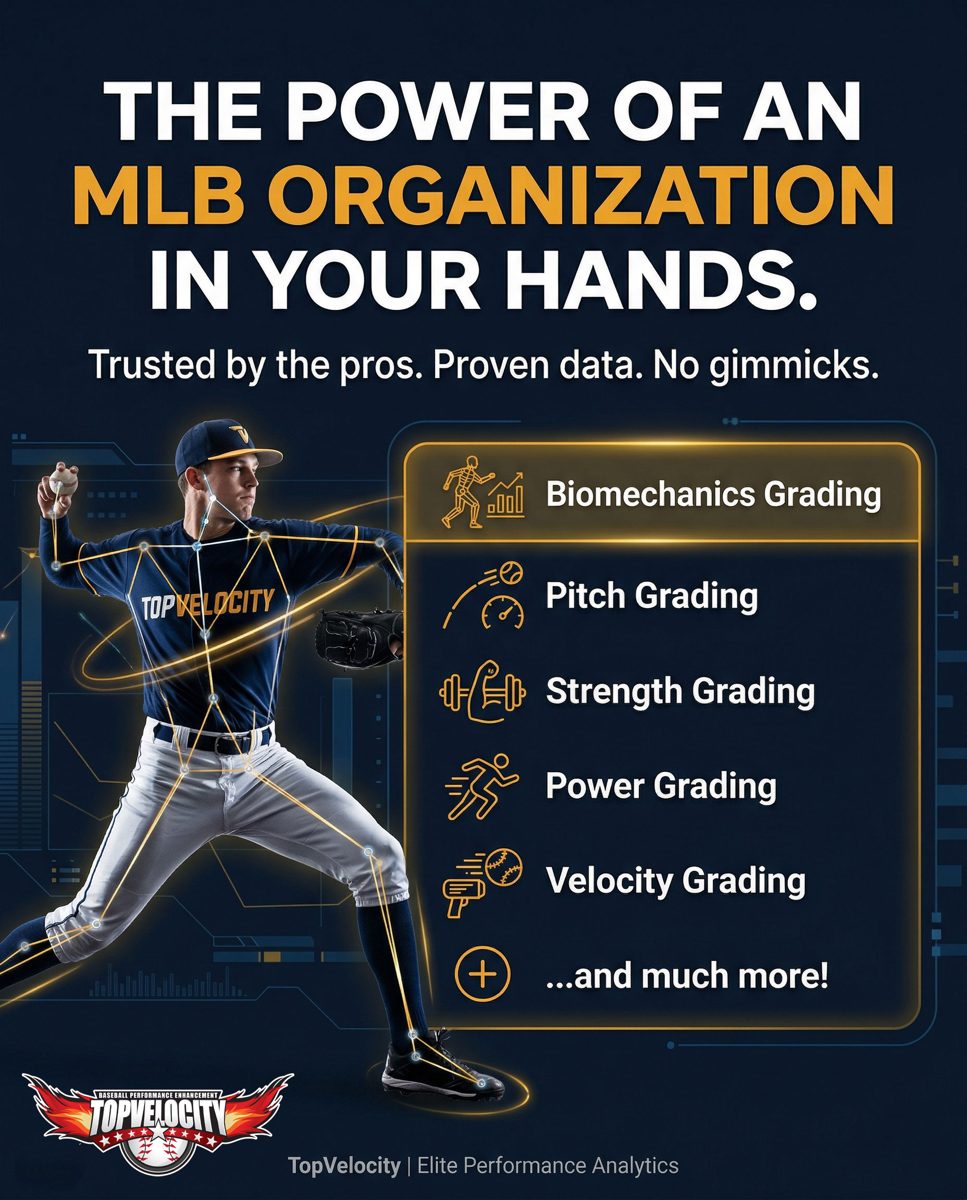
The model is a white-label player-development platform layered onto your existing organization. Your players get AI evaluations scored against national percentiles, MechanicsDNA 3D mechanics analysis, structured training programs, and an app — all under your organization’s brand. Families pay into it directly, year-round. You’ve turned dead months into recurring revenue while making your organization measurably stickier.
The economics scale two ways for a multi-team organization. A per-athlete development fee built into registration ($150–$300) creates network-wide revenue across every team; layered facility licensing adds another stream. The National Organization Revenue Calculator models this two-layer partnership live — network fee plus facility license — so you can see HQ revenue and total network value for your specific roster count.
Why Now: The Money Is Moving
Youth sports has become a roughly $40 billion market growing 8–10% a year (Aspen Institute), and private equity spent 2025 rolling up independent operators precisely because they’re undervalued and unsystematized (White & Case analysis). Adding a professionalized development platform is how an independent travel organization captures that premium itself — without selling to a roll-up.
Model the Revenue Stream for Your Travel Ball Organization
Put your network’s athlete count into the National Organization Calculator and see the year-round revenue and the offseason retention math for your specific size. Then ask Coach Brent’s AI what a partnership would look like for your organization — it handles org questions directly and connects you with the team. When you’re ready to build the numbers, register your organization and the team walks you through the license and launch plan. For the broader business case, see the 8 revenue streams of a profitable performance center.
💬 Talk to Brent — Free, No Signup
Frequently Asked Questions
Most rely on seasonal team fees (averaging $2,178/family) and tournament entries – one-time revenue that resets each year and disappears in the offseason. The durable model adds a year-round player-development stream that families pay into twelve months a year, plus optional facility licensing.
Give them visible, measured development between seasons. Players often leave not over playing time but because they can’t see progress. National-percentile evaluations, 3D mechanics grades, and structured programs give families a concrete reason to stay – and retention costs about 5x less than recruiting new players.
A white-label player-development platform layered onto your organization: athletes get AI evaluations, MechanicsDNA analysis, training programs, and an app under your brand, and families pay into it year-round. A per-athlete fee built into registration ($150-$300) creates network-wide recurring revenue.
It scales with network size. A per-athlete development fee across every team creates one revenue layer; facility licensing adds another. The National Organization Revenue Calculator models the two-layer partnership live so you can see HQ revenue and total network value for your specific roster count.
About the Author
Brent Pourciau, M.S., is the founder of TopVelocity. After tearing his rotator cuff at 18 and being told he would never pitch again, he rebuilt his delivery through peer-reviewed biomechanics research and returned to throw 94 mph in professional baseball. He holds a master’s degree in kinesiology with doctoral work in health sciences, and has trained 10,000+ athletes including 100+ MLB draft picks through the TopVelocity Player Portal and Performance Center licensing program.