Launching a TopVelocity Performance Center starts with a workable weekly routine: prepare your staff, onboard an initial group of athletes, deliver the assigned training and review what happened. Use the first 30 days to establish that routine before expanding your roster.
This practical launch plan is for baseball facility owners, academy operators and coaching organizations. Adapt the schedule to confirmed staff training dates, athlete availability and your facility’s capacity. It is a planning framework, not a promise that certification or a full launch will finish within 30 days.
What do you need before launching?
Identify the staff member responsible for the launch, the athletes you can serve first, the coaching hours available and the membership offer you intend to deliver. If you are still comparing systems, start with our baseball player development platform guide.
As of October 3, 2026, TopVelocity organization plans start at $1,250 per month for up to 30 athletes; the next tiers are $1,500 for up to 50 and $2,500 for up to 100. The registration page lists the organization portal, player app, training programs, evaluation tools, staff certification and support, and a TopVelocity brand license. It describes portal access after payment and staff certification training scheduled with the team.
For an overview of the licensing path and an information-package request, explore joining TopVelocity as an organization.
Before committing, confirm billing and capacity terms, training availability, required equipment, any additional costs and the scope of the brand license. Prepare a representative training week for your organization demo so you can see how the platform fits the work your coaches actually do.
Planning your center? Compare organization plans and use the four phases below to map your launch.
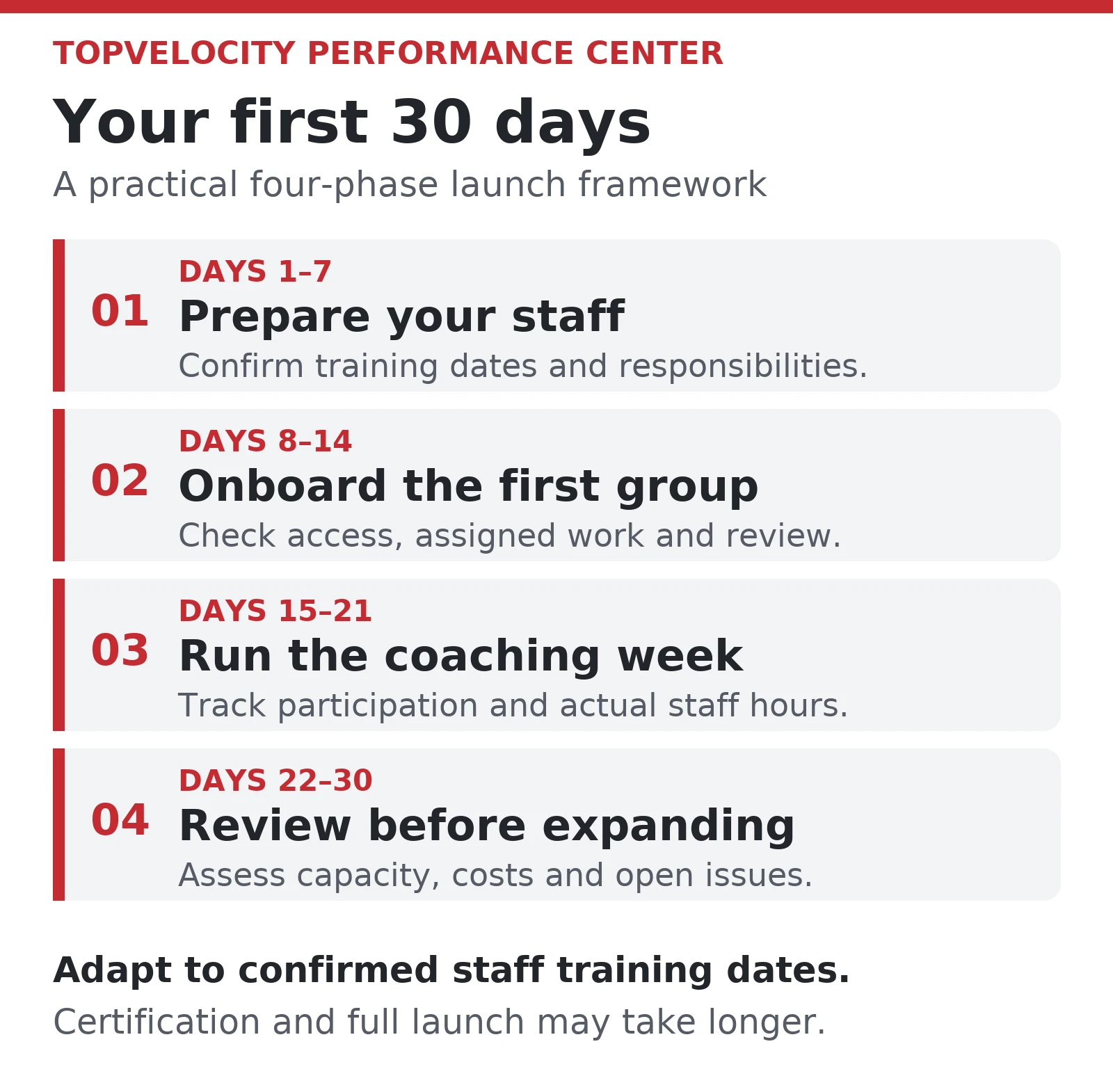
Days 1–7: Prepare your staff and first training week
Name one launch owner who can make everyday decisions and one backup. Assign responsibility for roster information, staff preparation, athlete communication and the weekly review. One person may fill several roles in a small facility; make each responsibility explicit.
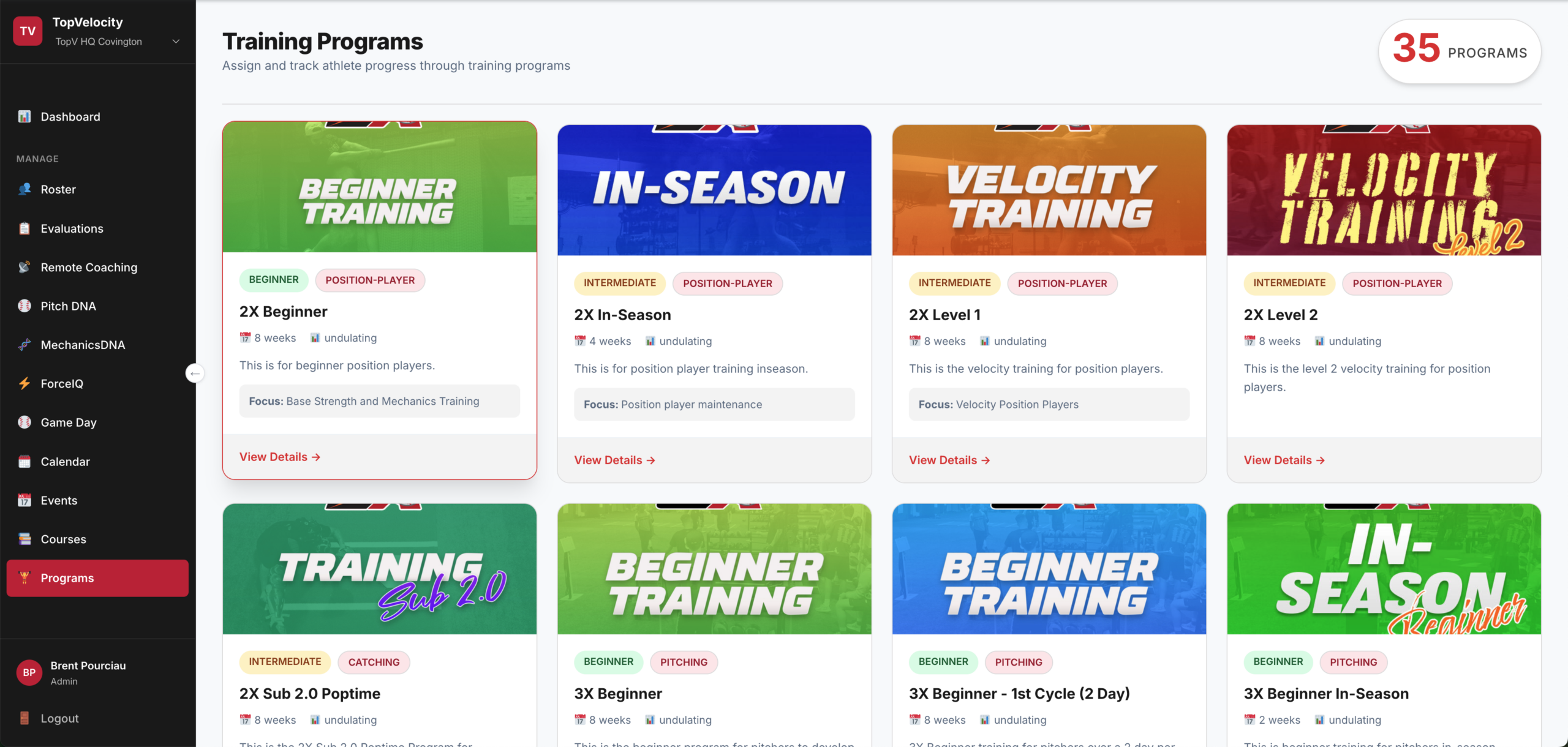
Schedule staff training with the TopVelocity team. Use that training to understand which available programs fit your participants and how your coaches should use the included tools. Ask for demonstrations of MechanicsDNA, PitchDNA and ForceIQ that relate to the athletes you will serve first.
Build the first operating week around your actual equipment, space and coaching hours. Keep lessons, practices and existing memberships on the calendar so you can see where the new program fits. Decide who answers account questions and who handles coaching questions.
Week-one checkpoint: Record the launch owner, backup, confirmed training dates, initial roster, equipment needs and open questions. Give every open question an owner and a next step.
Days 8–14: Onboard a small initial group
Start with a group your staff can support closely. Five to ten athletes is a useful planning example, not a TopVelocity requirement or platform limit. Choose the group size based on your confirmed staffing and schedule.
Explain the experience in ordinary language: where athletes find their work, who answers questions, what they should record and when a coach reviews it. Give parents or guardians the information appropriate to the participants and confirm your permissions and communication process.
Walk through the athlete experience before inviting the next group:
- Check that the athlete can access the correct account.
- Confirm the intended training is available and the instructions are understood.
- Show the athlete how to record the information your program requires.
- Verify that the responsible coach can review that information.
Record obstacles and follow up. A missing completion may reflect an access problem, unclear instructions, a scheduling conflict or work that was not done. Speak with the athlete before deciding which explanation applies.
Week-two checkpoint: List who was invited, who accessed the platform, who completed the first assigned work and which issues remain open.
Days 15–21: Run a repeatable coaching week
Establish a routine for staff preparation, athlete orientation, training delivery, review and follow-up. Set specific times for coaches to review participation and tell athletes how to raise questions between sessions.
Track the time spent on scheduled coaching, account support, individual follow-up and administration. Compare those hours with your membership budget before adding more athletes. The initial group gives you a practical way to check whether your staffing assumptions were realistic.
Use our baseball facility membership pricing worksheet to compare collected fees, delivery costs and the enrollment needed to cover your license.
Make focused adjustments. If athletes struggle to find their training, improve the instructions. If review work exceeds scheduled staff hours, change the review process or staffing plan. Add more features as your team becomes comfortable with the core routine.
Week-three checkpoint: Document your weekly schedule, actual staff hours, recurring questions and the changes planned for the next week.
Days 22–30: Review the launch before expanding
Evaluate enrollment, participation, staff workload and collected revenue separately. Each answers a different question about whether you are ready to invite the next group.
| Review area | What to record | Decision it supports |
|---|---|---|
| Onboarding | Invited athletes, successful access and unresolved issues | Whether the next group can join smoothly |
| Participation | Assigned sessions and recorded completions over the same period | Whether instructions or scheduling need adjustment |
| Staff capacity | Coaching, support and administration hours | How many additional athletes staff can serve |
| Program budget | Collected fees, delivery expenses and license costs | Whether the membership offer supports its costs |
| Feedback | Specific athlete, parent and coach observations | Which problems to address first |
If key access or staffing questions remain unresolved, extend the initial phase. Early participation can help you improve operations, but it does not establish that the platform caused performance gains, new revenue or better retention.
Use the baseball academy software checklist to review the workflows you have tested and any you still need to validate with your staff.
Turn your launch plan into a working center
Bring your initial roster size, staff availability and weekly training schedule to a TopVelocity organization demo. A focused walkthrough can help you connect those plans with the portal, training package and onboarding process.
Ready to get started? Choose the organization plan that fits your roster and register your TopVelocity Performance Center.