How much should you spend on youth baseball training? Less than you’re spending on youth baseball exposure — and the numbers prove it. The average family now spends $1,016 per year on a child’s primary sport, up 46% since 2019, and travel baseball families routinely spend $2,000–$15,000 a year. Meanwhile, the thing that actually moves a player’s ceiling — measurable physical development — costs a fraction of one tournament season. Here’s the real 2026 math.
What Families Actually Spend on Youth Baseball
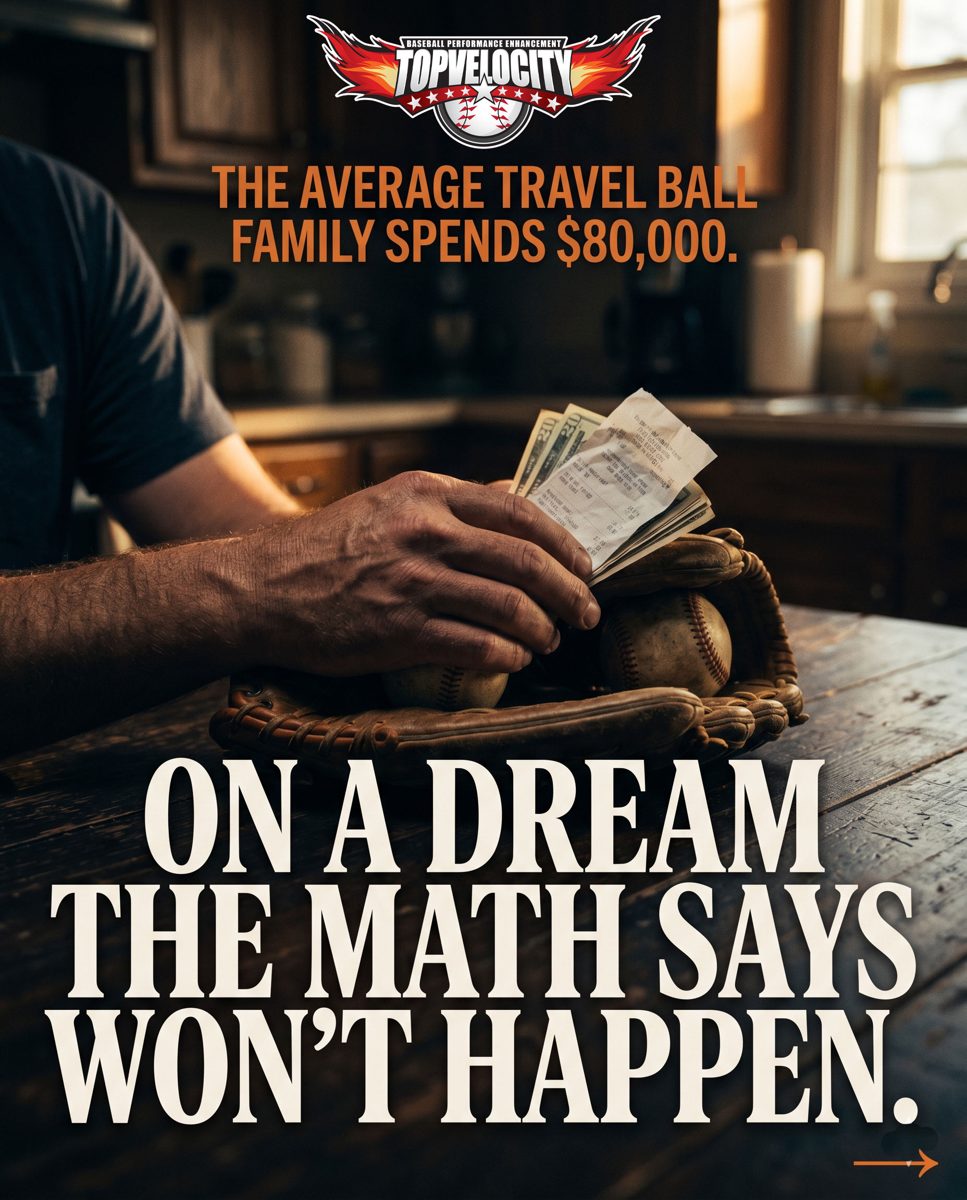
The sources behind those bars: the Aspen Institute’s 2025 parent survey (1,848 families) puts primary-sport spend at $1,016/year and total youth-sports spend at roughly $40 billion. The Bat Digest survey of 700+ travel families found average team fees of $2,178/year — before travel, hotels, equipment, and the $300–$700 tournament entries that stack five to ten deep each season. At the elite end, families report $10,000–$15,000 a year. And it’s straining real budgets: in a 2025 New York Life survey, 25% of travel-sports parents pulled from savings or emergency funds to pay for it.
What Is All That Spending Buying?
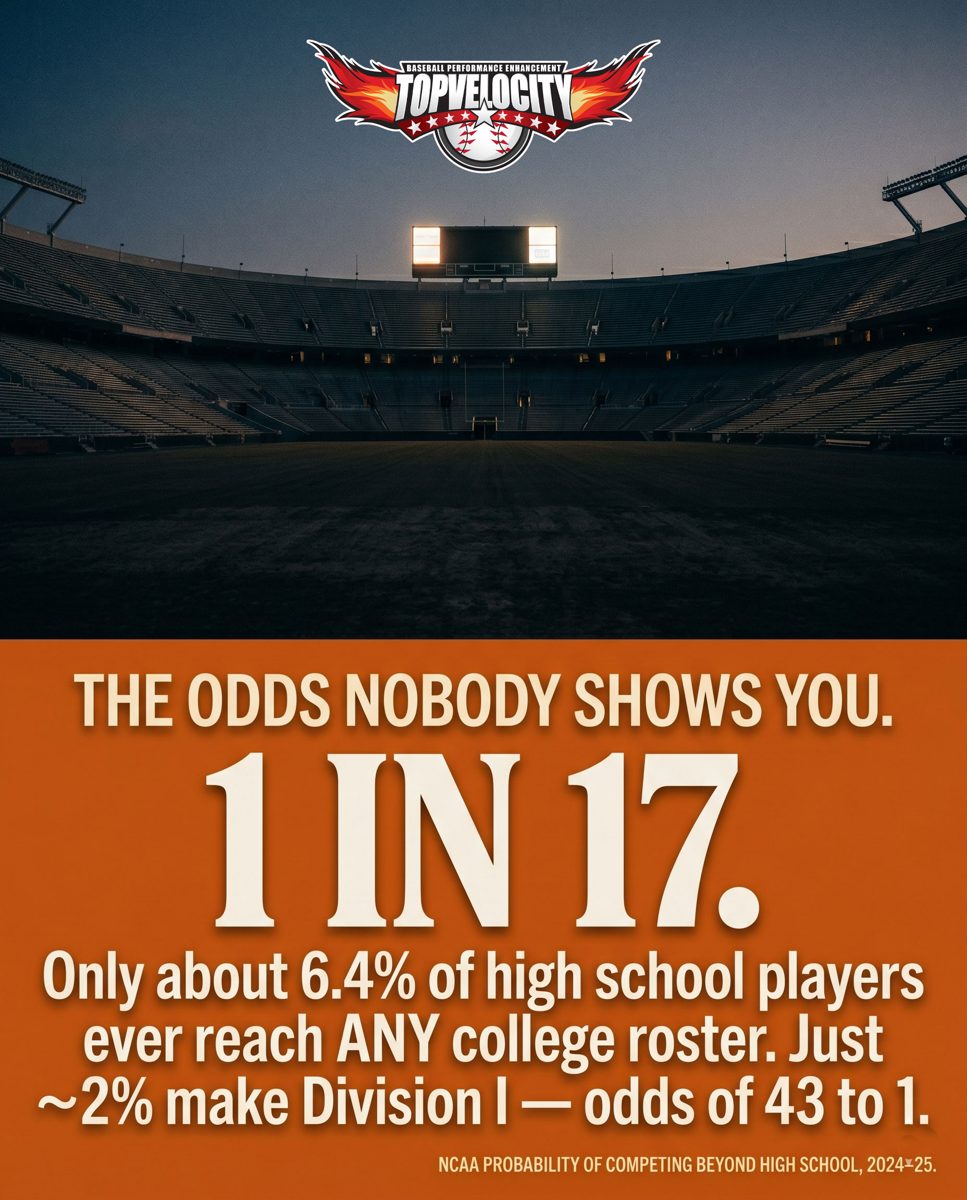
For most families, the honest answer is: a lottery ticket. The NCAA’s own probability data says only about 6.4% of high school players reach any college roster, and roughly 2% reach Division I — 43-to-1 odds. And the prize is smaller than advertised: D1 baseball programs split 11.7 scholarships across up to 27 funded roster spots, so the typical award is a partial — often around $5,000 a year at a public school. Families spending $10,000+ a year on exposure are, financially speaking, paying double for a discount they probably won’t receive.
None of this means quit travel ball — competition matters, and so does the love of playing. It means know what each dollar buys. Tournaments buy innings and visibility. They do not buy velocity, strength, or mechanics — and velocity is the gate that recruiting actually walks through, as we showed in the velocity benchmarks by age.
The Development-First Budget
Here’s the reallocation that changes outcomes. Keep a sane competitive schedule. Then put the next dollars into things that produce measurable physical change:
- Measurement first (free–$297). A free MechanicsDNA scan and the velocity calculator tell you where he actually stands; ForceIQ ($297) adds strength and injury-risk testing at home. You can’t budget for a problem you haven’t named.
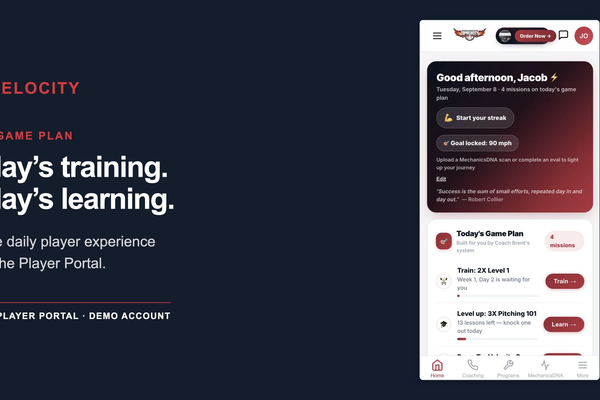
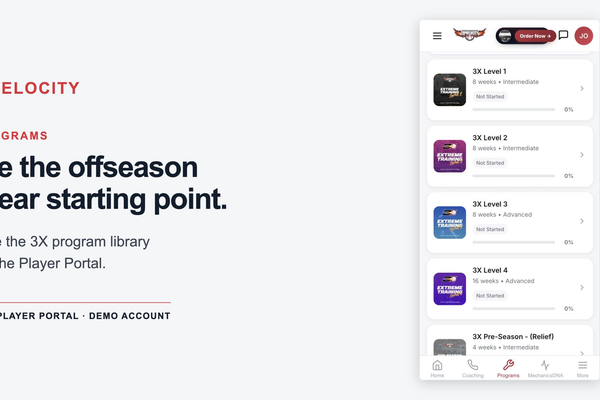
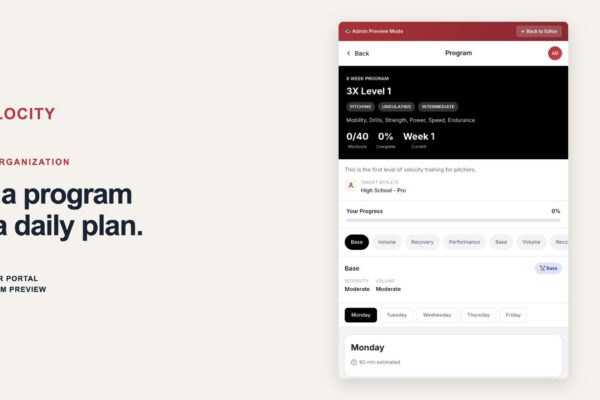
- A year-round development system ($1,188/yr). The TopVelocity Player Portal at $99/month — programs by age and level, video analysis, AI coaching, evaluations against national percentiles — costs about half of one average travel-team fee.
- Hands-on coaching at milestones ($1,497–$2,997). A 3X Velocity Camp to diagnose, teach, and launch the program — with a year of the app included. Compare that to the same money spent on one showcase circuit summer, and ask which one changes the radar gun. We ran the camp math in Are Velocity Camps Worth It?
That whole development stack — measurement, year-round system, and a camp — costs less than many families spend on hotels alone in a single tournament season. And unlike exposure, it compounds: the 84-mph junior who becomes an 89-mph senior doesn’t need ten showcases to get noticed.
What Should YOUR Budget Be?
It depends on his age, his velocity, your local options, and your finances — which is why a generic article shouldn’t decide it. Ask Coach Brent’s AI instead: tell it your son’s age, current numbers, and what you’re spending now, and it will tell you — free — where the next dollar should actually go. Sometimes the answer is “don’t spend anything yet; here’s the free scan first.” That’s the answer a salesman won’t give you and the data will.
Frequently Asked Questions
Average team fees alone run $2,178/year (Bat Digest survey of 700+ families). All-in costs with travel, hotels, equipment, and $300-$700 tournament entries typically land between $1,000 and $5,000, with elite programs reaching $10,000-$15,000 per year.
NCAA probability data puts it at roughly 6.4% of high school players reaching any college roster and about 2% reaching Division I. D1 programs split 11.7 scholarships across up to 27 funded spots, so the typical award is partial – often around $5,000/year at a public school.
It’s worth it for competition, innings, and the experience – if the budget is sane. It’s not a development plan: tournaments measure ability, they don’t build it. The families who get recruited pair a reasonable competitive schedule with year-round measurable development – velocity, strength, mechanics.
Measurement plus a structured year-round system. A free MechanicsDNA scan and velocity calculator establish the baseline; the TopVelocity Player Portal ($99/month – $1,188/year, about half one travel-team fee) covers programs, video analysis, AI coaching, and evaluations; a development camp adds hands-on coaching at milestones.
About the Author
Brent Pourciau, M.S., is the founder of TopVelocity. After tearing his rotator cuff at 18 and being told he would never pitch again, he rebuilt his delivery through peer-reviewed biomechanics research and returned to throw 94 mph in professional baseball. He holds a master’s degree in kinesiology with doctoral work in health sciences, and has trained 10,000+ athletes including 100+ MLB draft picks through the TopVelocity Player Portal and Performance Center licensing program.