Are velocity camps worth it? Here’s the honest answer: a velocity camp is worth it when it diagnoses your pitcher with real data, teaches a method you keep training afterward, and includes the follow-through program — and it’s an expensive weekend when it doesn’t. The camp itself is two days. The velocity comes from the sixteen weeks after. So judge any camp by what happens when you drive home.
What Do Baseball Camps Actually Cost in 2026?
The price range is enormous, and the labels are confusing. Here’s the market:
| Event type | 2026 cost | What it’s for |
|---|---|---|
| Local clinic | $30–$100 | Reps and fundamentals — not velocity |
| College ID camp | $150–$250 | Exposure: that school’s coaches see you |
| University summer camps | $335–$950 | Instruction + exposure, large groups |
| Showcase events | $300–several thousand | Measurement & visibility — changes nothing physically |
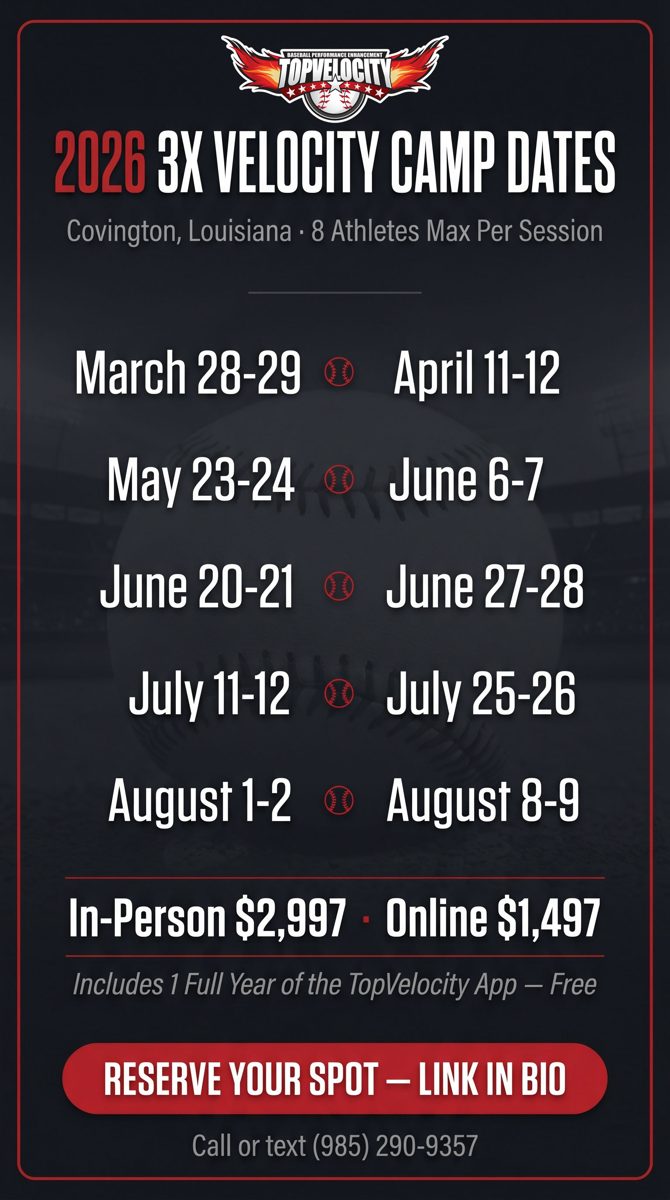
| 3X Velocity Camp (online) | $1,497 | Development: full eval + method + year of the app |
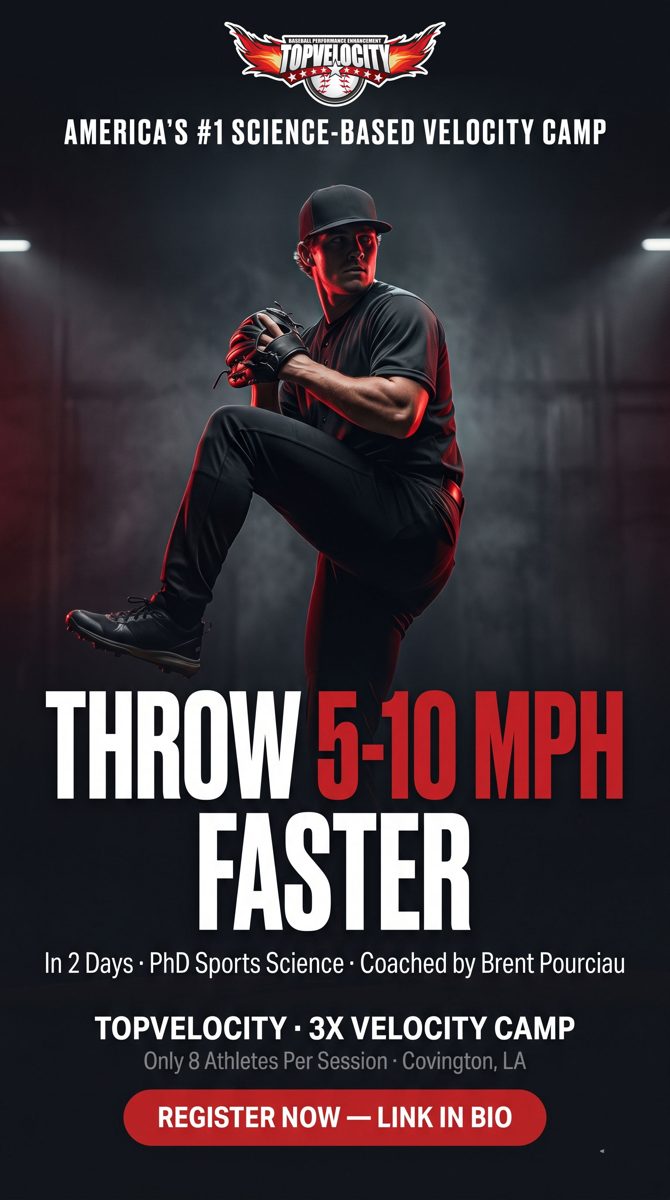
| 3X Velocity Camp (in-person) | $2,997 | 2 days, 8 athletes max, 3D capture, Olympic-lift coaching, year of the app |
Note what the cheap end and the expensive end have in common: most of them are exposure events, not development events. A $250 college ID camp exists so coaches can see players. A showcase exists so scouts can time them. Neither makes anyone throw harder. A development camp exists to change the athlete — which is why evaluating it requires different questions.
Why Camps Fail (and It’s Not the Coaching)
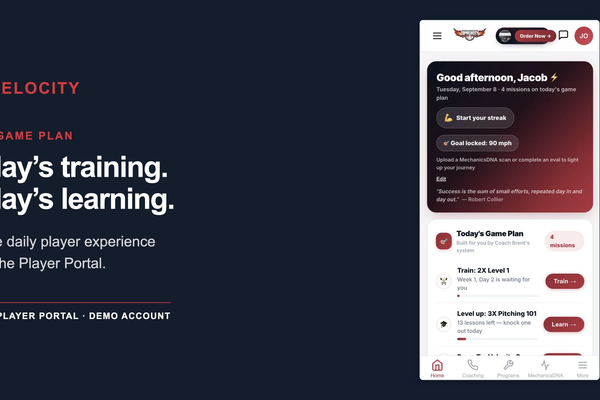
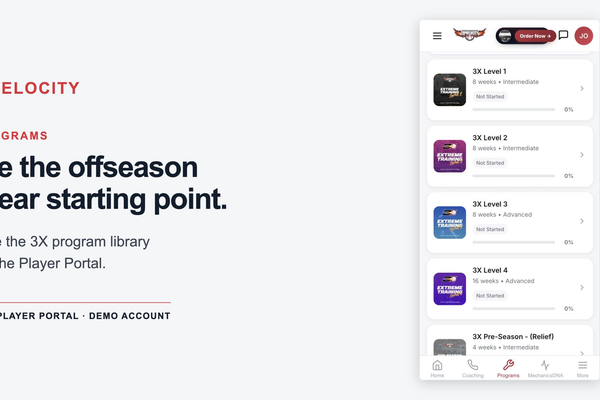
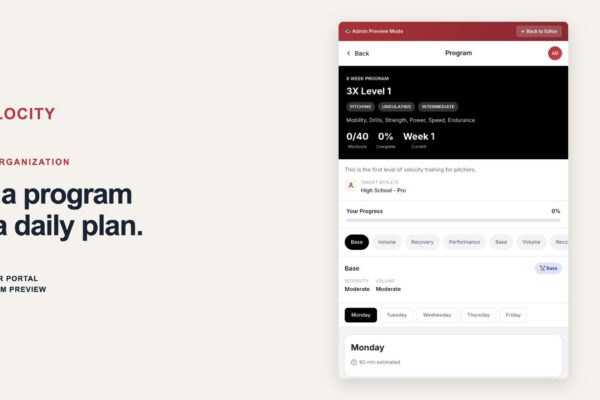
However, camps fail in week three — after the energy fades and there’s no structure to hold the new mechanics. The parent-forum consensus across every baseball community says the same thing: camps are worth it only if the kid does the follow-up work. That’s a program design problem, not a willpower problem. A weekend can diagnose and teach; only a program can build. This is exactly why the 3X Velocity Camp includes a full year of the TopVelocity app — programs, video analysis, and AI coaching — with every registration ($2,997 in-person in Covington, LA; $1,497 online with full credit toward in-person). The camp is the launch. The year after is the velocity.
What the two days buy at a development camp done right: a full athletic evaluation (50+ metrics against national percentiles), 3D mechanics capture, mobility analysis, Olympic-lift coaching, the 2-lb med-ball drill system, and a prescribed program based on what the data found — with 8 athletes per session, not 80.
Camp vs. Showcase: Which Does Your Pitcher Need?
Run the math by goal. If your son already sits 88+ with command, exposure events have a purpose — coaches need to see him. If he’s throwing 76 and chasing 85, exposure is premature by definition: showcasing a fastball that isn’t ready just documents it. About $300+ per showcase event, five to ten events a season, spent timing a number that training could change — that’s the spending pattern we break down fully in how much you should spend on youth baseball. Development first, exposure when there’s something to expose.
How to Decide for Your Situation
Every pitcher’s math is different — age, current velocity, mechanics, budget, season timing. That’s a conversation, not an article. So have it: ask Coach Brent’s AI whether a camp makes sense for your son right now, or whether he should start with the $99/month Player Portal and a free MechanicsDNA scan first. It knows the honest answer includes “not yet” — and it’ll tell you that, free, in about two minutes.
💬 Talk to Brent — Free, No Signup
Frequently Asked Questions
In 2026, local clinics run $30-$100, college ID camps $150-$250, university summer camps $335-$950, and showcase events $300 to several thousand per circuit. TopVelocity’s 3X Velocity Camp is $1,497 online or $2,997 in-person, both including a full year of the training app.
Only when there’s something to show. Showcases measure and display ability – they don’t build it. A pitcher below the velocity benchmark for his target level gets more from development training; exposure starts paying off once the radar-gun number is recruitable (typically 85+ for college interest).
A data-driven evaluation (50+ metrics), 3D mechanics capture, a documented training method, qualified strength coaching, small groups (single digits per coach), and – most importantly – a structured follow-through program. The weekend diagnoses and teaches; the following months produce the velocity.
From the two days alone: usually some mechanical quick wins. From the camp plus the program year it launches: TopVelocity athletes average 5-10+ mph. That’s why the camp includes 12 months of the app – the gains live in the follow-through, not the weekend.
About the Author
Brent Pourciau, M.S., is the founder of TopVelocity. After tearing his rotator cuff at 18 and being told he would never pitch again, he rebuilt his delivery through peer-reviewed biomechanics research and returned to throw 94 mph in professional baseball. He holds a master’s degree in kinesiology with doctoral work in health sciences, and has trained 10,000+ athletes including 100+ MLB draft picks through the TopVelocity Player Portal and Performance Center licensing program.