A good pitching velocity training program builds velocity from the ground up, screens for injury risk, individualizes by age and data, and measures progress — while a bad one chases mph by overloading the arm and selling drills with no plan behind them. Knowing the difference can save a parent thousands of dollars and protect a young arm. Here’s the checklist for spotting a real program and the red flags that signal a risky one.
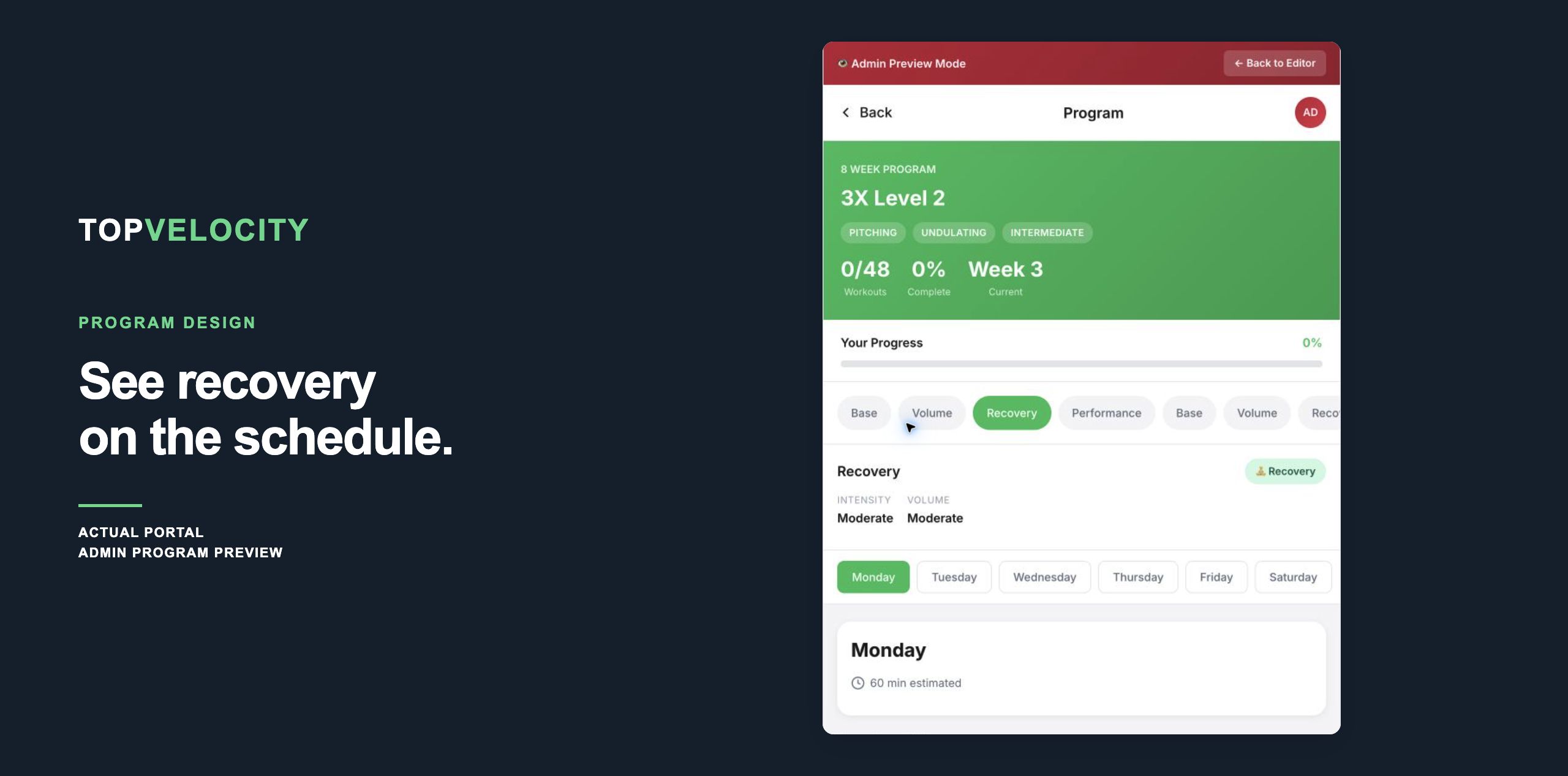
See recovery in the program schedule
The 3X Level 2 administrator preview shown above displays Recovery, Week 3. It gives you a specific part of the program schedule to discuss with a coach: how the starting level is chosen, what each phase is intended to do and how the plan is adjusted to the athlete. This is a program preview, not an athlete’s training record.
What Is a Pitching Velocity Training Program?
A pitching velocity training program is a structured, progressive training system designed to increase throwing speed by developing the whole kinetic chain — lower-body force, mechanics, mobility, and strength — not just the throwing motion. The defining word is structured: a real pitching velocity training program assesses the athlete, prescribes a sequenced plan, and tracks measurable progress. A bin of weighted balls and a “throw harder” cue is not a program; it’s a liability.
What Does a Good Velocity Program Include?
Five components separate a real development program from a marketing package. Every one should be present before you pay:
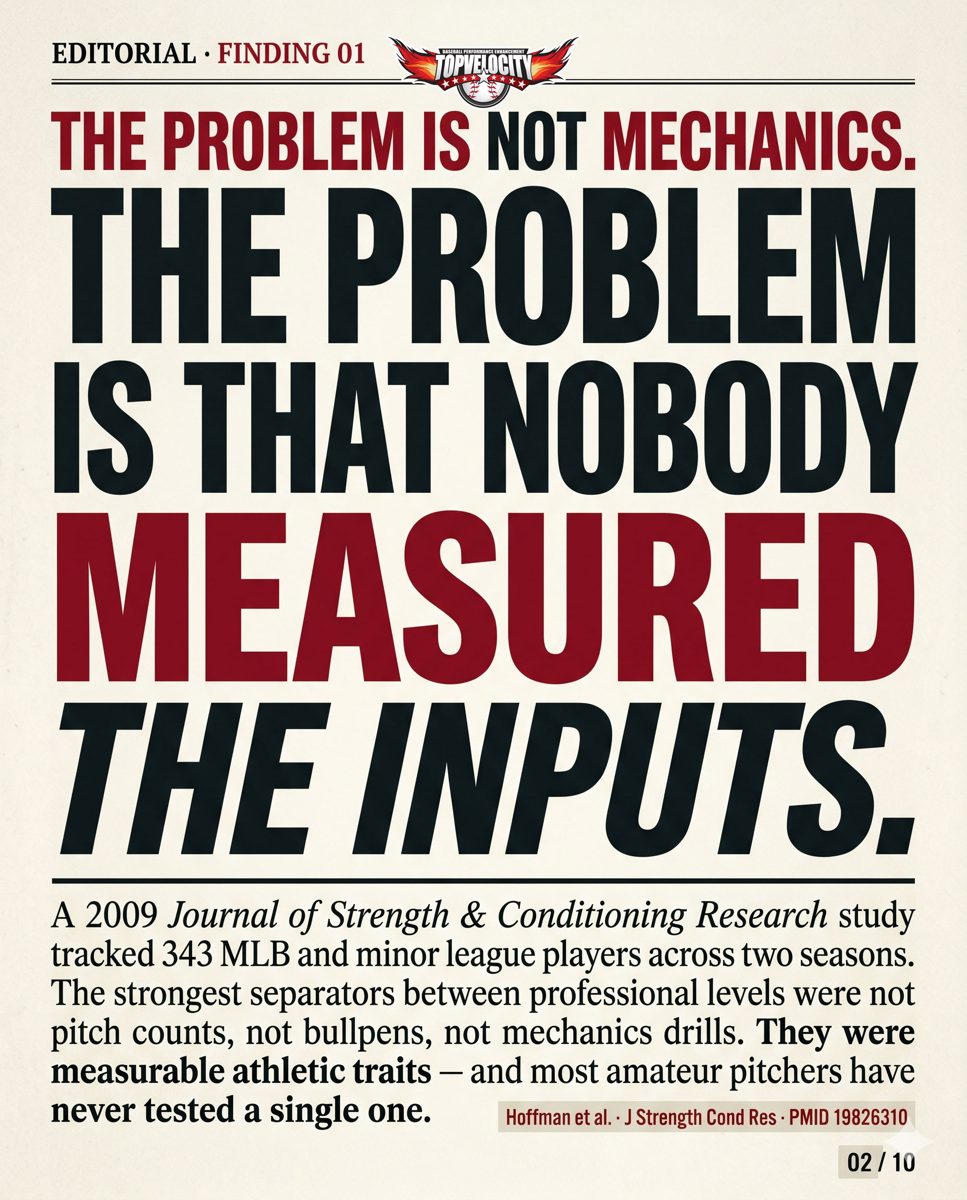
The throughline is measurement. A legitimate program starts with an evaluation, prescribes a plan based on what it found, and re-tests to prove the plan worked. If you can’t see your athlete’s numbers moving — velocity, mechanics scores, force output — you’re buying activity, not development.
What Are the Red Flags of a Bad Velocity Program?
The warning signs are consistent across the worst programs. Walk away if you see these:
| Red flag | Why it’s dangerous |
|---|---|
| Heavy weighted-ball protocol for everyone | 24% injury rate in the RCT; gains from joint laxity, not strength |
| No evaluation before training | Prescribing without assessing is guessing |
| Same plan for every age | Ignores developmental stage and injury risk |
| ‘Throw harder’ with no plan | Drills without a system don’t build durable velocity |
| No progress tracking | You’re buying activity you can’t measure |
The most dangerous red flag is an arm-overload velocity program with no individualization. A randomized controlled trial found a weighted-ball program raised velocity 3.3% but injured 24% of participants versus zero in controls (Reinold et al. 2018, Sports Health) — the gain came from shoulder laxity, not strength. A program that pushes the same heavy-ball protocol on every pitcher regardless of age or mechanics is selling risk. We detail the evidence in Are Weighted Baseballs Safe?

Is a Velocity Program Safe for Youth Pitchers?
A good one is the safest path to velocity; a bad one is among the most dangerous things in youth baseball. Safety comes from respecting workload (USA Baseball Pitch Smart guidelines), screening mechanics for high-torque patterns, testing strength asymmetries, and building velocity from the legs rather than the arm. Youth pitchers throwing over 85 mph already carry a 2.6x higher injury rate (Fleisig et al. 2011); a program that adds arm stress on top of that is multiplying a known risk. Health first — velocity is the byproduct of healthy mechanics, never the goal that overrides them.
How Much Should a Velocity Program Cost?
Quality and price aren’t the same thing. One-on-one lessons run $80–$140 an hour and cap the athlete to a coach’s available hours; a structured program delivered through a development platform runs about $99/month for unlimited programming, video analysis, and evaluation tracking. We compare the models in does an online pitching coach work. The real cost question isn’t the monthly fee — it’s whether the program is measurable and safe enough to be worth any price.
The TopVelocity program is built on all five green-flag components: ground-up mechanics, individualization by age and data, injury screening, qualified delivery, and measured progress — the system behind 100+ MLB draft picks. It runs inside the Player Portal ($99/month, 7-day free trial), with a free MechanicsDNA scan to start. Judge any program — ours included — against the checklist above before you spend a dollar.
Frequently Asked Questions
Five things: it builds velocity from the ground up (legs and trunk, not the arm), starts with an evaluation, individualizes by age and data, screens for injury risk, and measures progress with re-testing. The defining feature is measurement – a real program proves the plan worked.
A one-size heavy weighted-ball protocol, no evaluation before training, the same plan for every age, ‘throw harder’ coaching with no structured plan, and no progress tracking. The most dangerous is arm-overload training with no individualization, which injured 24% of participants in a controlled trial.
A good one is the safest path to velocity; a bad one is among the riskiest things in youth baseball. Safety comes from respecting workload (USA Baseball Pitch Smart), screening mechanics, testing asymmetries, and building velocity from the legs rather than overloading the arm.
One-on-one lessons run $80-$140/hour and cap the athlete to a coach’s hours; a structured program delivered through a development platform runs about $99/month for unlimited programming, video analysis, and evaluation tracking. The key question is whether it’s measurable and safe, not the monthly price.
About the Author
Brent Pourciau, M.S., is the founder of TopVelocity. After tearing his rotator cuff at 18 and being told he would never pitch again, he rebuilt his delivery through peer-reviewed biomechanics research and returned to throw 94 mph in professional baseball. He holds a master’s degree in kinesiology with doctoral work in health sciences, and has trained 10,000+ athletes including 100+ MLB draft picks through the TopVelocity Player Portal and Performance Center licensing program.