A baseball player development system is an integrated platform that evaluates athletes with objective data, prescribes structured training, tracks progress over time, and ties it all to recurring revenue — replacing the one-off, hourly “lesson” model. Facilities are switching to it because lessons cap income and churn members, while a development system measures results, retains families, and scales. Here’s what the model is and why it’s taking over.
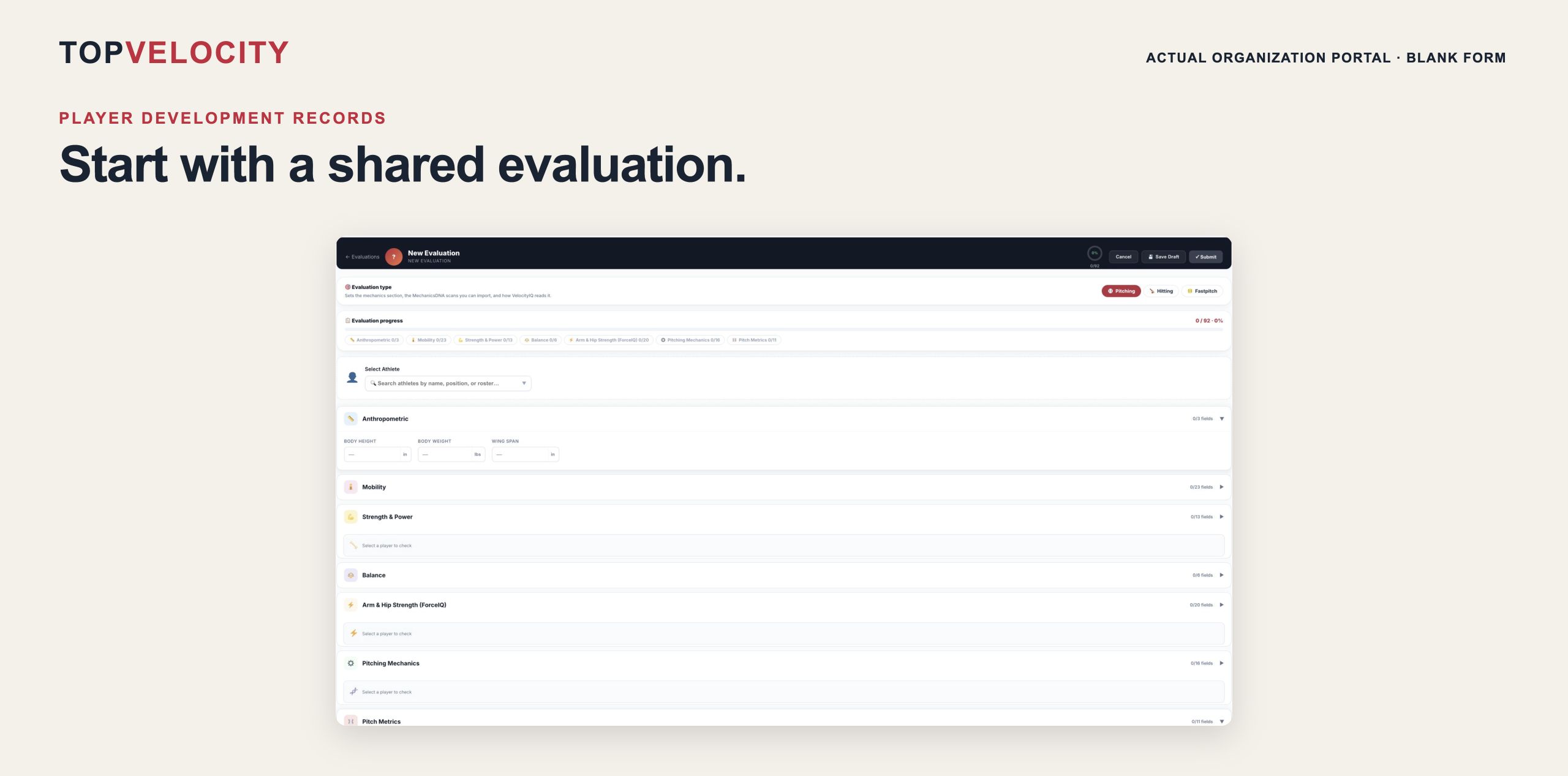
See where an evaluation begins
The blank New Evaluation form makes the recording step visible. Use a demonstration to review which information your staff would enter, how it is collected and how a coach would use the resulting record to discuss training priorities.
See the organization portal demo or compare organization plans and register.
What Is a Baseball Player Development System?
A player development system is the operating model that turns a baseball facility from a place that sells coaching hours into a platform that develops athletes with data. It has four parts working together: objective evaluation (national-percentile assessments, 3D mechanics analysis, force testing), structured programming tied to those results, longitudinal tracking that shows progress, and the technology to manage rosters, billing, and communication. The lesson model sells time; the development system sells measurable outcomes.
Why Are Facilities Replacing Lessons With a Development System?
Because the lesson model is structurally capped and the development model compounds. A private lesson earns once, depends entirely on the coach’s available hours, and gives the family no proof of progress between sessions — so they shop around. A development system converts that same athlete into a measured, recurring member with a visible reason to stay. The economics are decisive: acquiring a new customer costs roughly five times more than retaining one (Bain & Company), and members who train twice a week are far less likely to cancel.
| Lesson model | Development system | |
|---|---|---|
| Revenue | One-time, per hour | Recurring membership |
| Income ceiling | Capped by coach hours | Scales with the platform |
| Proof of progress | None between sessions | Measured monthly |
| Retention | Family shops around | Tracked investment keeps them |
| What you sell | Time | Measurable outcomes |
What Does a Player Development System Include?
A complete system has five capabilities. Each one is something the lesson model lacks:
The integration is the point. Evaluation data feeds the programming; the programming produces results; the tracking proves it; and the platform bills and communicates around all of it. A facility stitching together a scheduling app, a separate radar device, and a coach’s intuition has tools — not a system.
Why Is Measurable Data the Retention Engine?
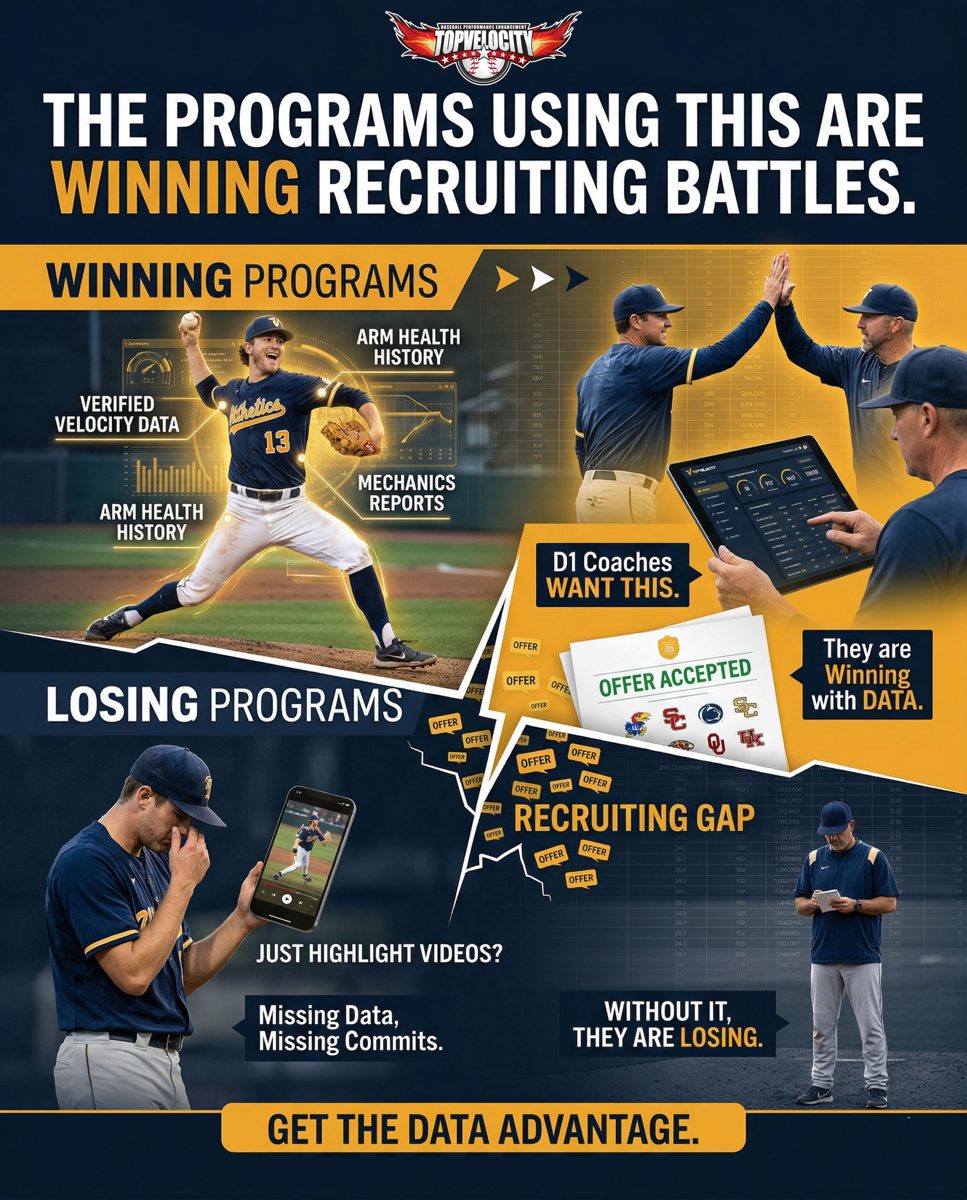
Families stay where they can see progress. The single biggest cause of churn at a baseball facility isn’t price or playing time — it’s the absence of visible development. When a parent can watch their son’s velocity, mechanics grade, and national percentile improve month over month, leaving means abandoning a tracked investment. National-percentile benchmarking — showing exactly where an athlete ranks against peers everywhere — is the credibility and retention lever the lesson model can never offer. This is why a development system both raises revenue and protects it.
How Do Facilities Adopt a Development System?
Two paths: build it or license it. Building means assembling evaluation software, 3D analysis, force testing, a program library, and certification over a year or more. Licensing the TopVelocity Performance Center platform delivers the entire system — AI evaluations with national percentiles, MechanicsDNA 3D analysis, ForceIQ, 15+ programs, the org portal, coach certification, and marketing — for $1,250–$2,500/month, operational in about 30 days. Partner facilities target a 4.4x–11.7x return and report 40%+ revenue increases. We compare the routes in facility software vs. a development platform.
The shift from lessons to a player development system is the same shift youth sports as a whole is making — toward measured, recurring, professionalized development in a $40 billion market. Model what it looks like for your facility in the free Revenue Calculator, or ask Coach Brent’s AI how the system would run at your location. For the full business case, see the 8 revenue streams of a profitable performance center.
Frequently Asked Questions
It’s an integrated platform that evaluates athletes with objective data (national-percentile assessments, 3D mechanics, force testing), prescribes structured training tied to those results, tracks progress over time, and manages rosters and billing – replacing the one-off hourly lesson model with measurable, recurring development.
Because lessons are capped and churn-prone while a development system compounds. A lesson earns once and gives families no proof of progress, so they shop around. A development system converts athletes into measured, recurring members, and retaining a member costs about 5x less than acquiring one.
Booking software manages schedules and billing for demand that already exists. A development system creates demand: evaluations, 3D analysis, force testing, structured programs, and national benchmarking that make families choose your facility and stay. One manages bookings; the other develops athletes.
Build it over a year-plus, or license it. The TopVelocity Performance Center platform delivers the full system – AI evaluations, MechanicsDNA, ForceIQ, 15+ programs, the org portal, and certification – for $1,250-$2,500/month, operational in about 30 days, with partners targeting a 4.4x-11.7x return.
About the Author
Brent Pourciau, M.S., is the founder of TopVelocity. After tearing his rotator cuff at 18 and being told he would never pitch again, he rebuilt his delivery through peer-reviewed biomechanics research and returned to throw 94 mph in professional baseball. He holds a master’s degree in kinesiology with doctoral work in health sciences, and has trained 10,000+ athletes including 100+ MLB draft picks through the TopVelocity Player Portal and Performance Center licensing program.