
A pitching velocity drop has exactly four causes: fatigue and workload, a mechanical leak, a force deficit from detraining, or an injury precursor. That’s the whole list. The good news is that each one is testable — so instead of panicking or “throwing through it,” you can diagnose the actual cause this week. Here’s the decision tree we use with every athlete whose velocity goes backward. This diagnostic guide covers every common pitching velocity drop cause and fix.
One rule before the diagnostics: a velocity drop is data, not bad luck. And because velocity loss is often the first sign of an arm protecting itself — appearing before pain does — rule out the injury branch first if there’s any elbow or shoulder symptom at all.
Cause 1: Fatigue — The #1 Pitching Velocity Drop Trigger
The signature: velocity fades late in outings or late in the season, mechanics look lazy, and recovery days fix it temporarily.
This is the most common cause and the most ignored. The research is direct: both upper-body and lower-body fatigue independently reduce pitch velocity (Tremblay et al. 2024, JSCR) — a pitcher with tired legs loses velocity even with a fresh arm. Count his last month: innings, pitch counts, showcases, bullpens, plus any new lifting volume. If the workload spiked, the fix is rest and a schedule, not more throwing. Critically, pitching through fatigue is also the single largest UCL risk multiplier in the injury literature, which makes this branch a safety issue, not just a performance one.
Cause 2: A Mechanical Leak
The signature: velocity dropped after a mechanical change, a growth spurt, or a new coach’s cue — and it’s consistent, not fatigue-dependent.
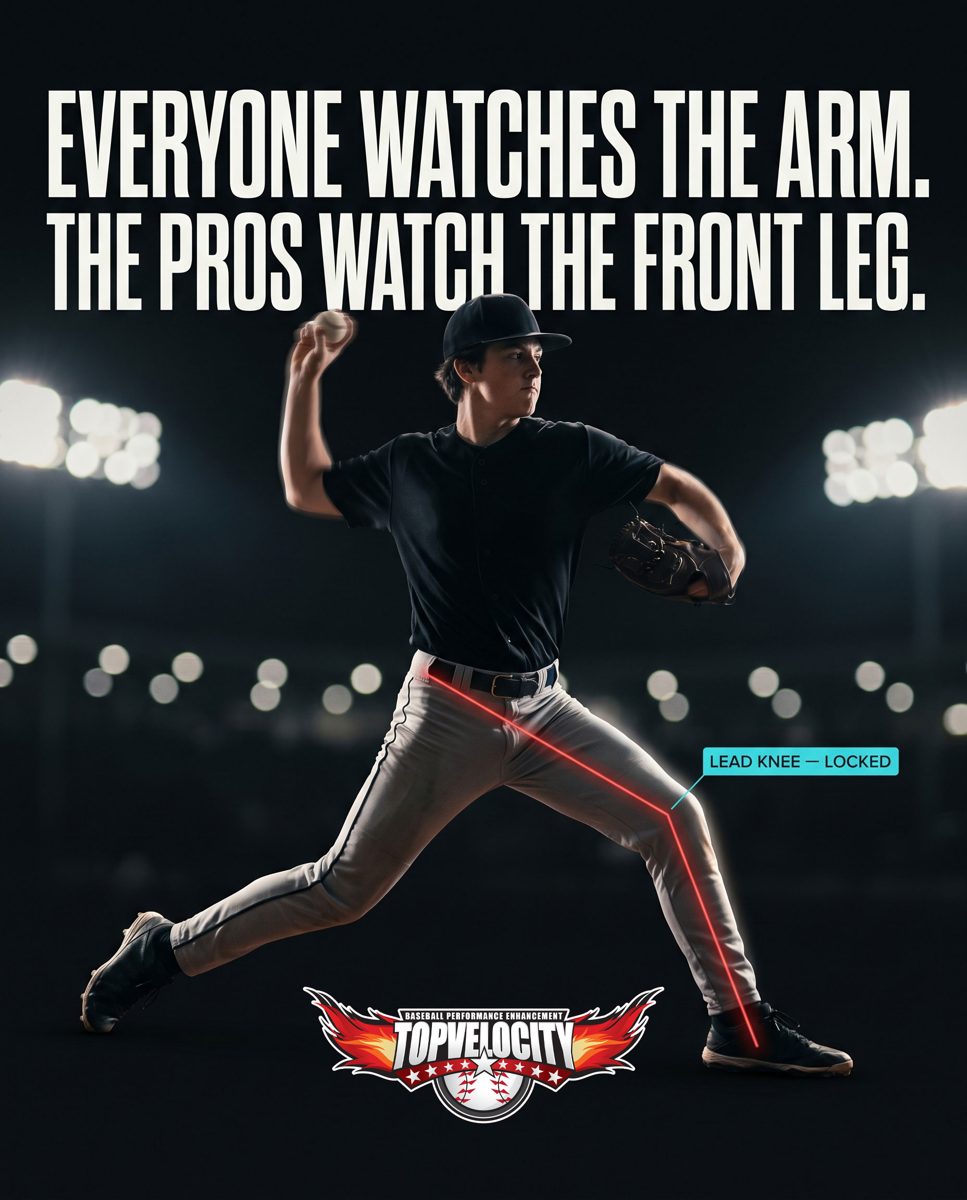
Small timing changes drain real velocity. Triple extension finishing late (after front-foot strike instead of before), a shortened stride, reduced hip-to-shoulder separation, or a lead knee that collapses at release — each leak bleeds mph, and none of them are visible at full speed from the dugout. This branch is exactly what video analysis exists for. Upload one clip to the free MechanicsDNA Mini and it will grade the checkpoints and name the leak; the full MechanicsDNA 3D analysis scores all five delivery events on the 20-80 scale and tracks them scan to scan.
Cause 3: A Force Deficit
The signature: velocity slid gradually across a season — usually a season when the weight room disappeared.
This one has a clean experiment behind it: Division 1 pitchers who removed resistance training for eight weeks lost velocity, significantly (Gdovin et al. 2024, JSCR). The engine shrank, so the output dropped. Test it instead of guessing: re-test his vertical jump, broad jump, and sprint against his off-season numbers — our vertical jump benchmarks show what the numbers should be. If the jumps dropped with the velocity, the diagnosis is the weight room, and in-season maintenance lifting is the prescription.
Cause 4: An Injury Precursor
The signature: any elbow or shoulder symptom alongside the velocity drop — pain, stiffness, tingling fingers, “it just doesn’t feel right” — or a drop with no other explanation.
Treat this branch with respect: velocity loss is frequently the first symptom of a UCL problem, arriving before pain. The hidden version shows up in strength testing — a shoulder ER:IR strength ratio below ~0.66 multiplies shoulder injury risk roughly 4x (Byram et al. 2010), and every 5% of hip-abduction asymmetry raises throwing-arm injury risk 1.24x (Plummer et al.). The free two-minute Arm Risk Assessment screens the risk factors; the ForceIQ kit ($297) measures all 16 arm and hip markers at home. If symptoms are present, skip the testing and go straight to a sports-medicine physician — our UCL warning signs checklist tells you exactly what to watch for.
How to Run the Diagnosis This Week
- Day 1: Symptom check. Any elbow/shoulder signs → physician first. (Cause 4)
- Day 1: Tally the last 30 days of workload. Spike found → schedule rest and re-test in two weeks. (Cause 1)
- Day 2: Free MechanicsDNA Mini scan. Leak found → that’s the training priority. (Cause 2)
- Day 3: Jump and sprint re-test against baseline. Power down → restore the lifting. (Cause 3)
Every branch of the tree ends in something measurable. That’s deliberate — guessing is how velocity drops turn into lost seasons, and how small problems turn into surgeries. The full measurement stack — MechanicsDNA scans, ForceIQ testing, evaluations against national percentiles, and programs that rebuild the deficit you find — runs inside the TopVelocity Player Portal ($99/month, 7-day free trial). Diagnose first. Then train the actual problem.
Frequently Asked Questions
Four possible causes: accumulated fatigue from workload, a mechanical leak (often after a growth spurt or a coaching change), a force deficit from stopping strength training, or an arm protecting itself from a developing injury. Each is testable – start with the injury check, then workload, then video, then jump testing.
It can be – and it’s often the FIRST sign, appearing before pain. A pitcher unconsciously backs off to protect a stressed elbow or shoulder. Any velocity drop paired with elbow/shoulder symptoms, or with no other explanation, deserves a sports-medicine evaluation before more throwing.
It depends on the cause. Fatigue resolves in days to a couple of weeks of managed rest. A force deficit rebuilds over weeks of restored lifting (the detraining study lost velocity in just 8 weeks). A mechanical leak can return velocity quickly once identified and retrained.
Yes. D1 pitchers who removed resistance training for eight weeks lost measurable velocity (Gdovin et al. 2024). Maintenance lifting holds the force floor – just schedule heavy lower-body work away from outings, since lower-body fatigue independently reduces pitch velocity.
About the Author
Brent Pourciau, M.S., is the founder of TopVelocity. After tearing his rotator cuff at 18 and being told he would never pitch again, he rebuilt his delivery through peer-reviewed biomechanics research and returned to throw 94 mph in professional baseball. He holds a master’s degree in kinesiology with doctoral work in health sciences, and has trained 10,000+ athletes including 100+ MLB draft picks through the TopVelocity Player Portal and Performance Center licensing program.