To add a pitching velocity program to your baseball facility, decide which evaluation tools, training curriculum, staff education, and progress-reporting workflow you need. You can assemble those resources independently or license a platform that includes them. TopVelocity organization plans start at $1,250/month for up to 30 roster spots. Platform access begins when payment clears, and staff certification is scheduled with the TopVelocity team; onboarding timelines vary by organization.
Before launching, ask current families and local teams what they need, assess competing programs, and test whether your planned schedule and pricing fit your market. Existing youth-sports spending does not establish demand for a particular program at your facility. Start with a roster target your staff and schedule can realistically support.
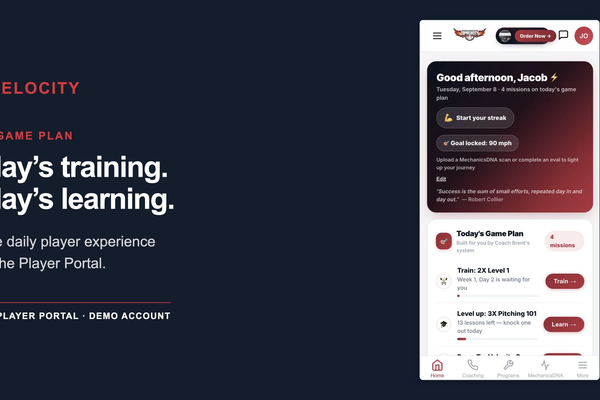
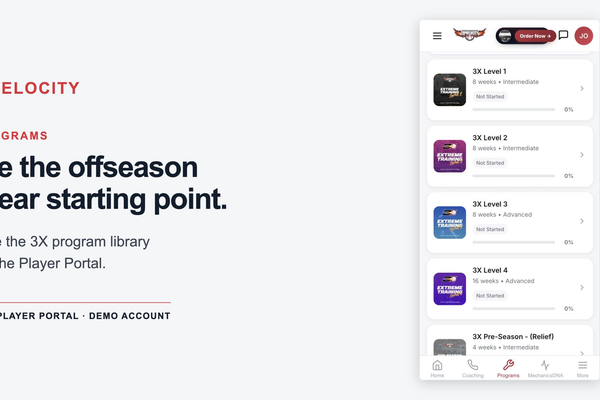
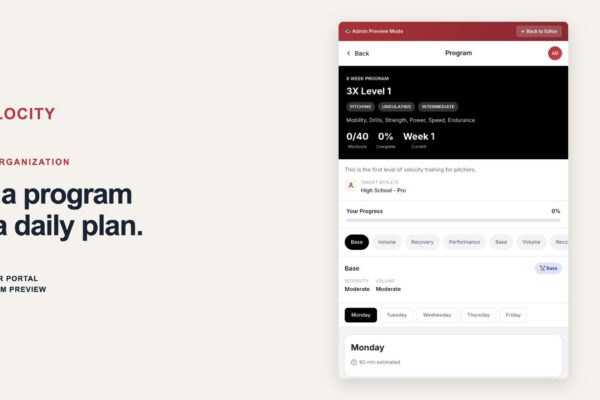
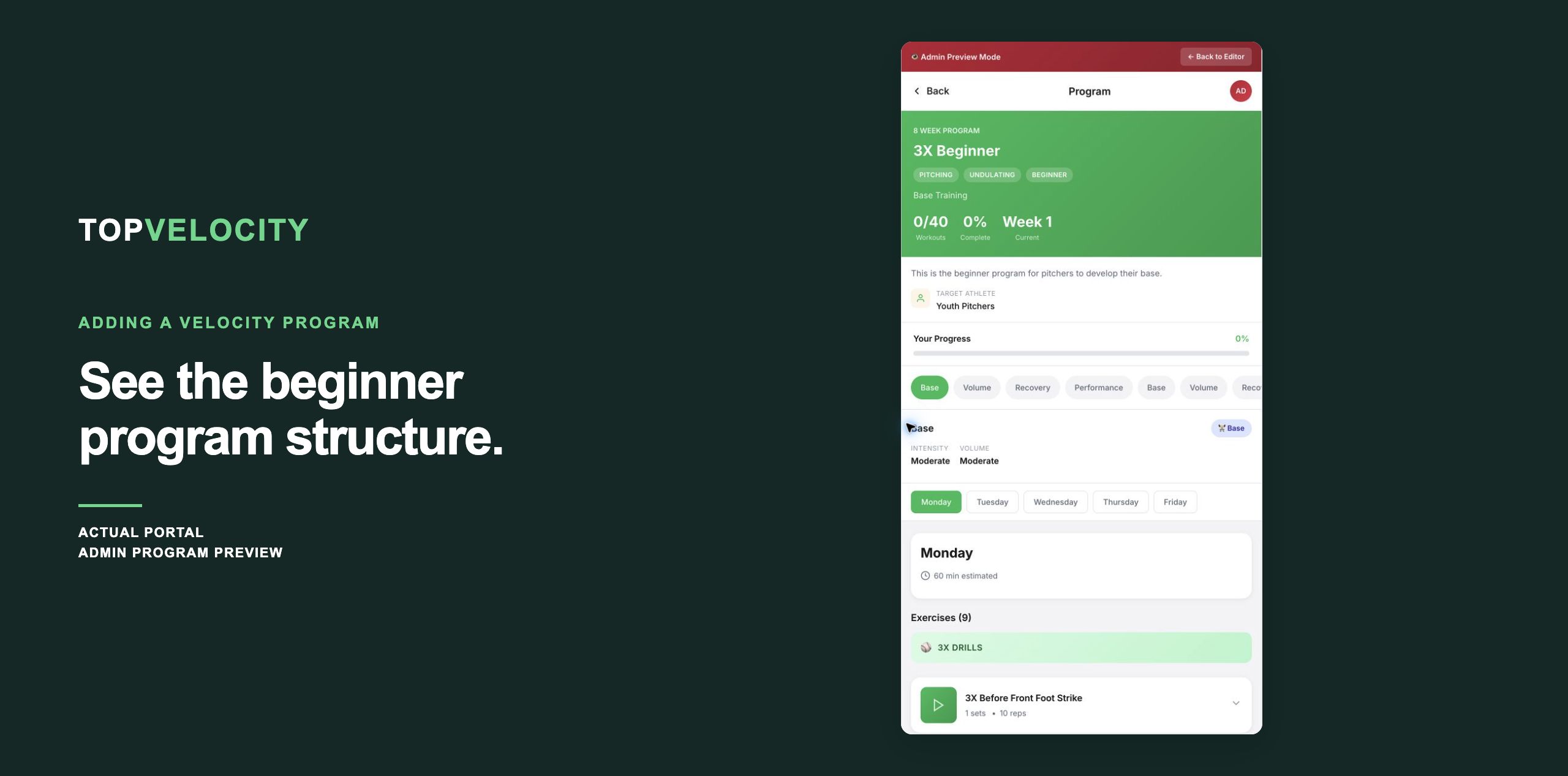
Preview the training before you launch
The 3X Beginner preview gives staff a concrete resource to review while planning delivery. Check the content, equipment and coaching responsibilities before choosing a program for an athlete; the preview itself does not determine the appropriate starting level.
See the organization portal demo or compare organization plans and register.
What Does a Pitching Velocity Program Actually Require?
A structured velocity program needs a repeatable approach to evaluation, training, monitoring, and delivery:
- Objective evaluation. Record a baseline and repeat assessments so coaches and families can review changes over time. TopVelocity evaluations report percentile rankings within the TopVelocity evaluation dataset.
- Training curriculum. Use progressive programs appropriate to each athlete’s age, experience, evaluation results, and training goals.
- Training monitoring. Review readiness, mobility, strength, and asymmetries to inform training decisions. ForceIQ provides guided educational monitoring; it is not a medical device or a guarantee against injury.
- Staff preparation. Train coaches to use the evaluation process, assign programs, and explain progress consistently. TopVelocity includes staff certification and ongoing support.
Build It Yourself vs. License a Platform
Compare the resources you can build internally with the tools, programs, and support included in a licensed platform:
Building a workflow independently means choosing tools, sourcing or developing programs, preparing staff, and connecting the information you want athletes and families to review. The TopVelocity organization platform includes evaluations, MechanicsDNA, PitchDNA, ForceIQ, training programs, roster management, events, staff certification, support, and marketing materials. Plans are $1,250/month for up to 30 roster spots, $1,500 for up to 50, and $2,500 for up to 100. Centers operate co-branded as “TopVelocity PC — Your Facility.” Access starts when payment clears; certification scheduling and onboarding timelines vary.
Before You Launch: Check the Delivery Workflow
Use this checklist to plan how the program will operate inside your existing facility. It is a readiness check, not a promised onboarding timeline.
- Define the first group and schedule. Choose the athletes you intend to serve, the training times you can accommodate, and the coaches responsible for delivery. Match your planned roster to the space and staff time available.
- Verify equipment and assessment inputs. List the evaluations and training activities you plan to offer. Check their documented equipment, space, video and measurement requirements before assuming your current setup is sufficient.
- Walk through the complete staff workflow. Review how an athlete is added, a baseline is recorded, a program is assigned, and progress is reviewed. Identify who enters information, who checks it, and what the athlete or family can see.
- Choose your review checkpoints. Decide how you will track attendance, completion, repeat assessments and staff workload. Use those records to identify delivery problems before expanding the roster.
Then compare the current organization plans and roster capacities against the workflow you have planned.
The Economics: Compare Memberships, Lessons, and Program Costs
Compare memberships, individual lessons, evaluations, camps, and team programs using your available coaching hours, facility capacity, pricing, and expected costs. These revenue streams can be part of your model, but recurring memberships do not guarantee profit or retention. Build conservative enrollment scenarios and include staffing, rent, utilities, insurance, marketing, and payment costs alongside the platform subscription. Illustrative revenue examples are not typical results or guarantees.
Track enrollment, attendance, renewals, cancellations, and the time coaches spend serving each athlete. Use repeat evaluations and clear progress reports to make development visible to families. Your facility’s own data will show whether the program supports retention and covers its costs.
How to Decide Which Pitching Velocity Program Fits Your Facility
Start with your current roster, staff capacity, training schedule, and local pricing. If you use the Performance Center Revenue Calculator, treat its output as an illustration and check what costs it includes. Compare the current organization plans and roster capacities against your delivery workflow. Our guide to facility software versus a development platform offers more questions to consider.
Compare Organization Plans & Pricing
Frequently Asked Questions
Choose an evaluation process, training curriculum, staff preparation plan, and progress-reporting workflow. You can assemble these independently or use a platform such as TopVelocity. Platform access begins when payment clears, while staff certification is scheduled with the team; onboarding timelines vary.
TopVelocity organization plans cost $1,250/month for up to 30 roster spots, $1,500 for up to 50, or $2,500 for up to 100. Every plan includes the platform, programs, staff certification, and support. Budget separately for your facility’s staffing, equipment, and operating costs.
Profitability depends on enrollment, pricing, staffing, program mix, facility costs, and retention. Model your own scenarios using realistic assumptions, then measure actual performance. A platform subscription does not guarantee revenue growth or a particular return.
A program needs age- and experience-appropriate training, qualified instruction, consistent monitoring, and clear communication about an athlete’s condition. TopVelocity supplies evaluation tools, structured programs, staff certification, and support. Its guided testing is educational monitoring for training decisions, not medical diagnosis or a guarantee against injury.
About the Author
Brent Pourciau, PhD, M.S., is the founder of TopVelocity. After tearing his rotator cuff at 18 and being told he would never pitch again, he rebuilt his delivery through peer-reviewed biomechanics research and returned to throw 94 mph in professional baseball. He holds a master’s degree in kinesiology and a PhD in Health Sciences from Liberty University, and has trained 10,000+ athletes including 100+ MLB draft picks through the TopVelocity Player Portal and Performance Center licensing program.