
Every private baseball coach hits the same wall: the 1-on-1 income ceiling. At $110 an hour and 20 lessons a week, you gross about $8,800 a month — and there is no 21st hour to sell without burning out. Raising your rate just moves the ceiling; it doesn’t remove it. The coaches who break past it stop selling their time and start selling a system. Here’s the math, and the three ways out.
Why the Private Baseball Coach Hourly Model Has a Hard Ceiling
Private baseball lessons run $80–$140 an hour, with elite and former-pro coaches at the top of that range. The income is good — until you do the arithmetic. There are only so many after-school and weekend hours when kids can actually train, and you can only be in one cage at a time. Your revenue is hard-capped by a number you can’t change: hours in a week.
And the ceiling has a trap door. The hourly model isn’t just capped — it’s fragile. You get sick, you take a vacation, the season shifts, and revenue stops cold. There’s no asset, no recurring income, nothing that earns while you sleep. You don’t own a business; you own a job that pays well until your body or your calendar gives out.
Why Raising Your Rate Isn’t the Answer
The instinct is to charge more. It works, briefly — then you hit the same wall at a higher number, and you’ve also priced out part of your local market. Worse, the hourly model is quietly bad for the athlete too: more lessons don’t equal better development. Velocity and mechanics are built through structured, progressive programming and strength work between sessions — not by buying another hour of a coach watching bullpens. The thing that’s capping your income is also capping your players’ results.
The 3 Ways a Private Baseball Coach Breaks the Ceiling
Every scalable coaching business runs on the same shift: from time-for-money to a productized, recurring-revenue platform.
- Group and small-group programs. One coach, one time slot, eight to ten athletes on a structured curriculum. Your effective hourly rate multiplies without adding a single hour to your week — and the athletes get a real program instead of ad-hoc tips.
- Memberships and remote training. Monthly memberships and online program delivery turn your existing clients into recurring revenue and let you earn from athletes who train off-site. Recurring revenue is the asset the hourly model never builds — and keeping a client costs about five times less than finding a new one (Bain & Company).
- License a complete system. The fastest path independent coaches take is to stop building everything from scratch and license a turnkey player-development platform — evaluations, programs, billing, the app, and certification — so your name and expertise scale on top of infrastructure that already works.
What “Going Independent” Looks Like for a Private Baseball Coach
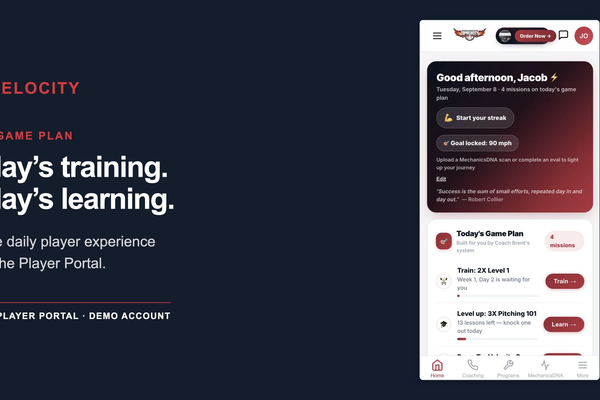
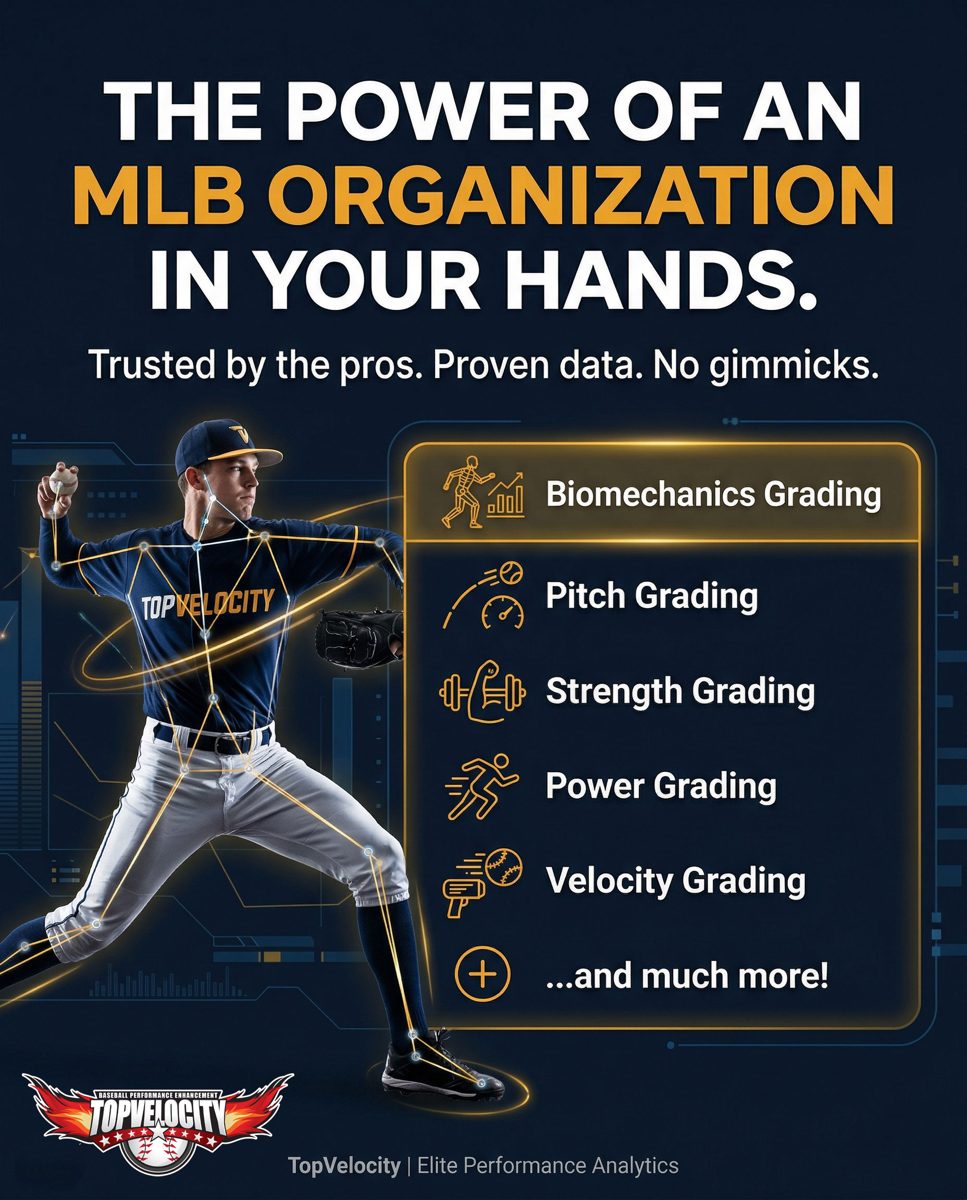
This is exactly what TopVelocity’s Performance Center licensing was built for: a coach who already has a book of clients and proven local demand, but no scalable vehicle. Licensing gives you the MechanicsDNA 3D analysis, AI evaluations with national percentiles, ForceIQ testing, 15+ structured programs, the org portal that runs your roster and billing automatically, and coach certification — for $1,250–$2,500/month depending on roster size. Your clients become members. Lessons become programs. Your expertise stops being capped by the clock.
The result owners report: a 4.4x–11.7x return on the license and 40%+ revenue increases — because the same hours now produce recurring, leveraged income instead of one-and-done sessions.
Run Your Own Numbers
See what your existing client book would generate as a platform instead of an hourly schedule. The free revenue calculator models it against your real athlete count and pricing. Then ask Coach Brent’s AI what going independent would look like for you — it answers coach and licensing questions directly and can connect you with the team. The hourly ceiling is real. So is the way past it.
💬 Talk to Brent — Free, No Signup
Frequently Asked Questions
Private lessons run $80-$140/hour in 2026. A full-time coach at $110/hour and 20 lessons a week grosses about $8,800/month before commissions – but that’s a hard ceiling, capped by the limited after-school and weekend hours when athletes can train and the fact that you can only coach one cage at a time.
Three ways: group and small-group programs that multiply your effective hourly rate, memberships and remote training that create recurring revenue, and licensing a complete development platform so your expertise scales on top of evaluations, programs, billing, and certification you don’t have to build.
It moves the ceiling instead of removing it – you hit the same wall at a higher number while pricing out part of your local market. The structural fix is converting time-for-money into a productized, recurring-revenue platform, which also delivers better player results than more one-on-one hours.
Yes – it’s the core use case for Performance Center licensing. A coach with proven local demand licenses the platform ($1,250-$2,500/month) to get evaluations, MechanicsDNA, ForceIQ, 15+ programs, an org portal for roster and billing, and certification, turning an hourly practice into a leveraged business.
About the Author
Brent Pourciau, M.S., is the founder of TopVelocity. After tearing his rotator cuff at 18 and being told he would never pitch again, he rebuilt his delivery through peer-reviewed biomechanics research and returned to throw 94 mph in professional baseball. He holds a master’s degree in kinesiology with doctoral work in health sciences, and has trained 10,000+ athletes including 100+ MLB draft picks through the TopVelocity Player Portal and Performance Center licensing program.